


What To Know
- Thailand’s economy is facing mounting pressure as sluggish consumer spending, rising household financial burdens, and persistent difficulties among small businesses threaten to undermine the country’s economic recovery.
- The Bank of Thailand confirmed in October that SME lending continued to contract across most sectors, even as credit to large corporations increased.
Thailand’s economy is facing mounting pressure as sluggish consumer spending, rising household financial burdens, and persistent difficulties among small businesses threaten to undermine the country’s economic recovery. While major corporations and internationally connected industries continue to generate revenue, many ordinary Thais are finding it increasingly difficult to maintain their living standards, leaving smaller enterprises struggling to survive.
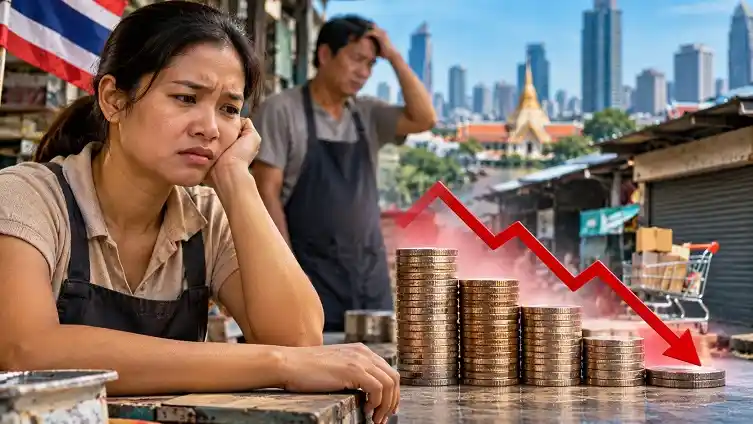
Image Credit: Bangkok Business News
Across Bangkok and Thailand’s provincial communities, the financial strain is becoming increasingly apparent. Restaurants, neighborhood retailers, market vendors, and family-operated businesses are confronting customers who have less disposable income and are increasingly cautious about spending. Against this troubling backdrop, this Bangkok Business News report examines the economic pressures squeezing households and businesses, raising concerns about Thailand’s longer-term economic prospects.
Household Debt Is Squeezing Consumer Spending
One of Thailand’s most serious economic vulnerabilities remains its exceptionally high household debt burden. Many families must allocate substantial portions of their monthly earnings toward mortgages, vehicle loans, credit cards, and other financial obligations.
As debt repayments consume household budgets, spending on restaurants, clothing, entertainment, and nonessential purchases becomes increasingly difficult.
For small businesses that depend on regular local customers, this reduction in discretionary spending can be devastating.
Microbusinesses and SMEs Face Growing Difficulties
Thailand’s microbusinesses and small and medium-sized enterprises (SMEs) are particularly vulnerable to weakening domestic demand.
Unlike larger corporations, smaller operators frequently lack substantial financial reserves, diversified revenue streams, or affordable access to financing.
Rising operating expenses, commercial rents, electricity bills, and employee wages can further squeeze already narrow profit margins.
Many entrepreneurs consequently face difficult choices between reducing staffing, absorbing financial losses, increasing prices, or closing their businesses altogether.
Economic Growth Is Failing to Reach Ordinary Thais
The Bank of Thailand’s October 28 assessment projected economic growth of 2.4% in 2026 and 2.1% in 2027. However, the central bank acknowledged that much of the improvement remains concentrated in technology-related exports and investment, while household purchasing power remains fragile.
This uneven recovery creates a troubling divide between businesses benefiting from international investment and smaller enterprises dependent on domestic consumption.
Meanwhile, Thailand’s household debt reached approximately 85.2% of GDP in June 2026, according to figures reported by Reuters. Such substantial indebtedness restricts household spending and complicates efforts to stimulate economic activity.
Small Businesses Struggle to Access Financing
Financial institutions have become increasingly cautious about lending to financially vulnerable businesses.
The Bank of Thailand confirmed in October that SME lending continued to contract across most sectors, even as credit to large corporations increased.
For smaller entrepreneurs, restricted financing can mean delayed expansion, reduced inventories, and difficulty meeting everyday operating expenses.
Thailand Faces an Economic Turning Point
Thailand’s difficulties extend beyond temporary fluctuations in consumer confidence. Weak productivity growth, an aging population, persistent household indebtedness, and unequal economic opportunities present significant structural challenges.
Although exports and technology investment provide reasons for cautious optimism, their benefits must spread more widely if Thailand is to achieve sustainable economic progress.
Without stronger household incomes, meaningful debt relief, improved access to financing, and policies supporting smaller enterprises, economic growth risks remaining disconnected from the everyday experiences of millions of Thais. Restoring confidence will require more than encouraging investment; it will demand measurable improvements in living standards and genuine opportunities for local businesses to prosper.


