


What To Know
- Thailand’s reputation as one of Asia’s leading food exporters faces growing uncertainty as reports of arsenic-contaminated rivers, hazardous industrial waste dumping, and potentially polluted agricultural land raise concerns about the safety of its food supply chains.
- Northern Thailand has become a focal point of environmental concern following reports of elevated arsenic concentrations in the Sai, Kok, and Ruak river systems.
Thailand’s reputation as one of Asia’s leading food exporters faces growing uncertainty as reports of arsenic-contaminated rivers, hazardous industrial waste dumping, and potentially polluted agricultural land raise concerns about the safety of its food supply chains. Environmental contamination originating from mining operations in neighboring Myanmar, combined with illegal industrial waste activities inside Thailand, has created a potentially serious challenge for agricultural producers, food processors, exporters, and government regulators.
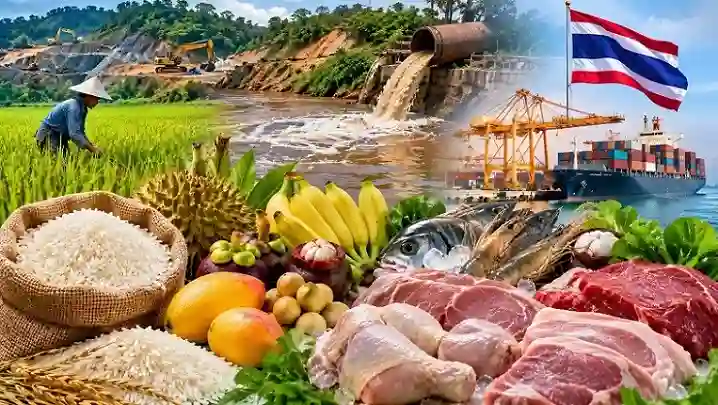
Image Credit: Bangkok Business News
The implications extend well beyond Thailand’s borders. International food safety authorities could intensify inspections of Thai agricultural and livestock products as concerns spread about possible contamination involving arsenic, cadmium, lead, mercury, and other hazardous substances. Against this increasingly troubling backdrop, this Bangkok Business News report examines the environmental threats facing Thailand’s food industry, the potential consequences for international trade, and the urgent measures needed to protect export markets. Although comprehensive import bans have not been established, the possibility of tighter restrictions represents a significant commercial risk.
International Markets Face Pressure to Strengthen Thai Food Inspections
Thailand exports substantial quantities of rice, tropical fruits, vegetables, seafood, poultry, processed foods, and other agricultural products to international markets.
The contamination concerns could prompt importing countries to demand additional laboratory testing, stricter documentation, and improved traceability for products originating from potentially affected regions.
European Union member states are particularly important because the bloc maintains stringent food safety regulations covering arsenic, cadmium, lead, mercury, and other contaminants.
Potential emergency screening could extend across multiple product categories, including fruits, vegetables, seafood, poultry, pork, beef, lamb, rice, and processed food products.
However, there is currently insufficient verified evidence to establish that countries have collectively ordered emergency screening of all Thai food imports or that European governments have announced comprehensive bans specifically because of these contamination reports.
Any such restrictions would require confirmation through official regulatory announcements.
Nevertheless, even targeted inspection measures could increase export costs, delay shipments, and damage confidence among overseas buyers.
Arsenic Pollution Threatens Northern Agricultural Regions
Northern Thailand has become a focal point of environmental concern following reports of elevated arsenic concentrations in the Sai, Kok, and Ruak river systems.
These waterways connect Thai communities with upstream areas of Myanmar’s Shan State, where mining activities have expanded amid limited environmental oversight.
Environmental monitoring has reportedly identified arsenic concentrations reaching approximately 25 to 30 times applicable Thai surface-water standards at certain sampling locations.
In Chiang Rai’s Mae Sai district, contamination concerns have reportedly disrupted water supplies affecting more than 20,000 households.
The implications for agriculture are particularly troubling because river water supports irrigation, fisheries, and surrounding farming communities.
Contaminated irrigation water can introduce arsenic into agricultural soils, potentially creating long-term risks for food production.
Myanmar Mining Operations Under Increasing Scrutiny
Mining activities across the Myanmar border are suspected contributors to the contamination affecting northern Thailand.
Gold extraction and rare-earth mining can disturb arsenic-bearing geological formations, allowing toxic substances to enter surrounding waterways.
Heavy rainfall can subsequently transport contaminated sediments downstream into Thai territory.
Chinese commercial interests have reportedly been associated with portions of Myanmar’s mining industry, although responsibility for specific pollution sources requires independent verification.
The cross-border nature of the contamination complicates enforcement because Thai authorities cannot directly regulate mining operations located inside Myanmar.
Without effective regional cooperation, pollution could continue entering Thailand despite domestic monitoring efforts.
Illegal Industrial Waste Dumping Creates Additional Threats
Thailand’s environmental difficulties extend beyond contamination originating in Myanmar.
Authorities have investigated illegal hazardous waste processing, unauthorized recycling facilities, and improper industrial waste disposal in provinces including Chonburi, Rayong, Prachinburi, and Samut Sakhon.
Some investigations have involved Chinese-linked businesses, Chinese nationals, or companies allegedly operating through Thai nominees.
Improperly stored electronic waste, industrial residues, and smelting byproducts may contain dangerous concentrations of lead, cadmium, and other toxic substances.
When these materials enter soil, groundwater, drainage systems, or irrigation networks, contamination can spread beyond industrial facilities.
Such pollution presents particular concerns in regions where manufacturing activities coexist with agricultural production and aquaculture.
However, contamination at individual facilities does not establish that entire provinces or their agricultural output are unsafe.
Rice, Fruits, and Vegetables Face Potential Contamination Risks
Rice production deserves particular attention because flooded paddy conditions can increase the availability of certain arsenic compounds.
Rice plants may absorb arsenic through their roots, with some subsequently accumulating in edible grains.
Repeated irrigation using contaminated water can increase the amount of arsenic entering agricultural soils.
Vegetables and fruits may also encounter contamination through polluted soil, irrigation supplies, or industrial dust.
Actual concentrations depend on crop species, soil chemistry, environmental conditions, and exposure duration.
Importantly, elevated arsenic measurements in soil do not automatically establish that harvested crops exceed food safety limits.
Product-specific laboratory testing remains essential before determining whether particular agricultural shipments are unsafe.
Seafood, Poultry, Pork, Beef, and Lamb Require Careful Assessment
Contamination concerns also extend to animal production and aquatic food supplies.
Fish and other aquatic organisms can encounter hazardous substances through polluted water, sediments, and food sources.
Livestock, including poultry, pigs, cattle, and sheep, may be exposed through contaminated drinking water, feed, or grazing environments.
This creates potential concerns involving chicken, pork, beef, and lamb products originating from affected production systems.
However, exposure does not necessarily translate into unsafe concentrations in edible meat.
Different contaminants accumulate differently across animal species and tissues.
For example, mercury contamination in aquatic food chains differs significantly from arsenic exposure in livestock.
Comprehensive testing must therefore assess specific contaminants in actual food products rather than assuming contamination based solely on nearby environmental pollution.
European Import Restrictions Could Carry Serious Economic Consequences
The European Union’s established food safety framework allows authorities to reject shipments that exceed applicable contaminant limits.
Depending on verified findings, regulators may introduce intensified border checks, additional certification requirements, or restrictions targeting particular products and origins.
A wider prohibition would represent a substantially more serious development requiring a documented regulatory basis.
For Thai exporters, additional inspections could create significant logistical complications.
Perishable fruits, vegetables, chilled seafood, and fresh meat products are particularly vulnerable to delays.
Longer clearance periods can increase refrigeration expenses, disrupt delivery schedules, and reduce product shelf life.
Exporters could also face demands for independent laboratory certification before shipments leave Thailand.
The commercial consequences could extend to farmers, processing facilities, transportation companies, and international distributors.
Long-Term Health Risks Increase Regulatory Urgency
Chronic exposure to inorganic arsenic is associated with skin lesions, cardiovascular disease, and increased risks of certain cancers.
Cadmium can damage kidneys and bones, while lead exposure presents serious neurological risks, particularly for children.
Methylmercury is especially concerning because of its effects on neurological development.
These health consequences explain why international regulators maintain strict limits for hazardous contaminants in food.
However, the presence of pollution in rivers or industrial locations does not establish that consumers are receiving dangerous exposure through Thai food products.
Reliable risk assessments require measurements of contaminant concentrations, chemical forms, consumption patterns, and exposure duration.
Thailand Must Strengthen Testing and Export Traceability
Protecting Thailand’s food export industry requires coordinated action involving environmental regulators, agricultural authorities, food safety laboratories, and international trading partners.
Priority measures should include expanded river and groundwater monitoring, agricultural soil assessments, and systematic testing of food produced in potentially affected areas.
Exporters also need stronger traceability systems identifying production locations, irrigation sources, livestock feed suppliers, and processing facilities.
Independent laboratory verification would help reassure international buyers while preventing unsupported contamination allegations from damaging unaffected producers.
Authorities must simultaneously strengthen enforcement against illegal hazardous waste operations and pursue cooperation with Myanmar over upstream mining pollution.
Transparent publication of verified results will be essential for maintaining credibility.
Protecting Thailand’s Food Export Reputation
Thailand’s contamination challenges represent a serious warning for an economy heavily dependent on agricultural production and international food trade. Although existing evidence does not demonstrate widespread contamination of Thai exports or justify claims of imminent nationwide import bans, documented environmental pollution demands decisive intervention. Stronger inspections, transparent testing, effective enforcement, and international cooperation are essential to protect consumers, preserve market access, and prevent localized environmental damage from developing into a broader economic crisis.


