


What To Know
- The dramatic increase marks the highest inflation level seen in 38 months and reflects the intensifying impact of soaring energy costs linked to ongoing instability in the Middle East.
- In the middle of growing nationwide concern, this Bangkok Business News report finds that many vendors are now unable to continue absorbing rising operating expenses and are being forced to pass those costs directly to consumers.
Bangkok Business News: Thai consumers are increasingly struggling with rising living expenses as the prices of popular single-dish meals continue climbing sharply across the country. From basil fried rice and chicken rice to noodle dishes sold at roadside stalls, meals once considered affordable daily staples are now becoming noticeably more expensive for millions of households already burdened by weak economic growth and mounting financial pressure.
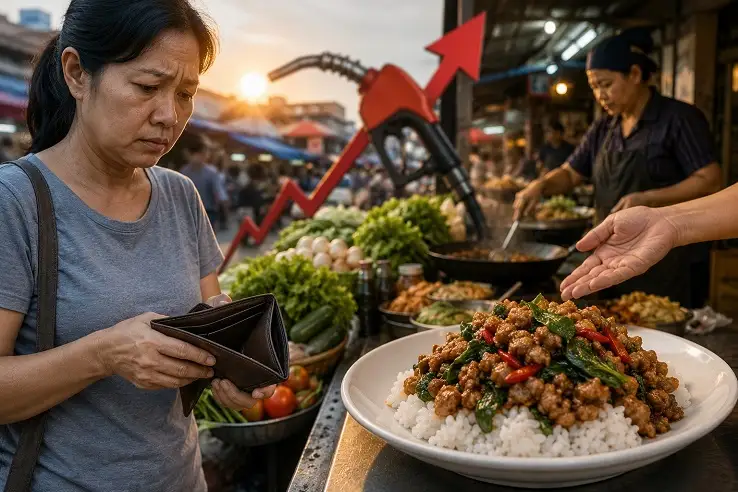
Image Credit: Bangkok Business News
Thailand’s latest inflation figures reveal the growing strain on ordinary citizens. According to the Trade Policy and Strategy Office (TPSO), headline inflation surged to 2.89 percent in April 2026, compared to only 0.08 percent in March. The dramatic increase marks the highest inflation level seen in 38 months and reflects the intensifying impact of soaring energy costs linked to ongoing instability in the Middle East. In the middle of growing nationwide concern, this Bangkok Business News report finds that many vendors are now unable to continue absorbing rising operating expenses and are being forced to pass those costs directly to consumers.
Fuel Prices and Heatwave Trigger Food Crisis
Officials say a sharp 30.23 percent increase in fuel and energy prices has become the primary driver behind the latest wave of food inflation. Transportation expenses for moving vegetables, meat, rice, and cooking supplies across provinces have risen significantly, placing enormous pressure on restaurant owners and street food operators.
At the same time, Thailand’s extreme heatwave has severely damaged vegetable farms and disrupted agricultural output in several regions. Reduced harvests have led to shortages in local markets, causing fresh produce prices to climb rapidly within a short period.
The TPSO described the situation as a “supply shock” that is now rippling through the nation’s food sector. Vendors who previously tried to maintain stable menu prices are increasingly left with little choice but to raise prices in order to survive.
A survey covering 1,396 food items across seven popular meal categories showed that nearly 10 percent of products experienced immediate price adjustments during April alone.
Southern Thailand Hit Hardest
The South has emerged as the region suffering the biggest impact, with some food prices increasing by as much as 25 percent. Northeastern provinces followed with rises of more than 15 percent, while Bangkok and surrounding metropolitan areas recorded increases nearing 15 percent as well.
Public transportation and inter-provincial travel costs have also jumped sharply, further squeezing household budgets. Analysts warn that rising transport fees are creating a domino effect across nearly every consumer sector.
Fears of Stagflation Grow
The sudden inflation surge has sparked fresh concerns that Thailand could be drifting toward stagflation, a dangerous economic condition marked by slow growth and persistently high inflation. TPSO officials, however, insist the country has not yet entered a full stagflationary period because unemployment levels remain relatively stable and economic activity has not completely stalled.
Even so, economists caution that worsening food inflation could continue spreading through Thailand’s wider food and beverage industry over the coming months. With TPSO forecasting inflation to climb further in May, many families fear the financial pressure will only intensify as everyday essentials become increasingly difficult to afford across the country.
For the latest on the Thai Economy, keep on logging to Bangkok Business News.



