


What To Know
- The Ministry of Labour is now weighing an urgent plan to import 10,000 Sri Lankan workers to plug the gap — a move some experts warn could create deeper problems in the long run.
- Thailand’s labour market stands at a crossroads — either take the short-term fix of importing workers from further afield or build a more resilient workforce strategy by drawing on regional ties and investing in skill development.
Bangkok Business News: Urgent Labour Gap as Cambodians Leave in Droves
Thailand is facing a severe shortage of unskilled workers after tens of thousands of Cambodians abruptly returned home following last month’s deadly border clashes. The exodus, driven by fears for their safety, has left key sectors including farming, construction, fishing, and services struggling to cope. The Ministry of Labour is now weighing an urgent plan to import 10,000 Sri Lankan workers to plug the gap — a move some experts warn could create deeper problems in the long run.
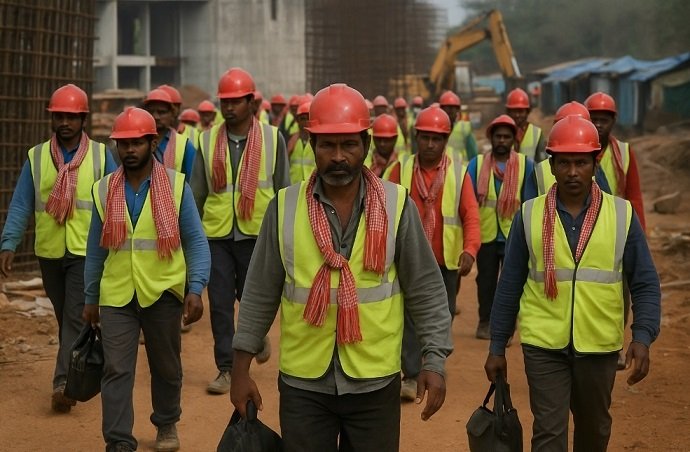
Many are warning that the Thai government plans to bring in Sr Lankan workers are not only ridiculous but also dangerous
Image Credit: AI-Generated
Local business and labour specialists are urging authorities to reconsider the strategy, arguing that the cultural and skill differences could hinder Sri Lankan workers’ adaptation. According to this Bangkok Business News report, experts believe that Thailand’s long-standing reliance on labourers from neighbouring Cambodia, Laos, and Myanmar is based on shared work experience, cultural values, and religious similarities that allow for faster integration into Thai society.
Concerns Over Skills and Cultural Fit
Labour analysts caution that Sri Lankan workers, while capable, may require extended adjustment periods to match the agricultural and industrial skills already common among workers from Thailand’s border nations. They stress that importing from more distant countries is not purely an economic matter but one of cultural compatibility and social cohesion. The concern is that once tensions with Cambodia subside, returning Cambodian workers could create oversupply and new conflicts within the workforce.
Scale of the Cambodian Exodus
Government estimates suggest around 500,000 Cambodian workers have returned home, with over 300,000 passing through Chanthaburi province alone. On a single day, more than 2,500 Cambodians crossed back into their homeland via the Ban Laem checkpoint in Pong Nam Ron district. Before the crisis, an estimated 1.5 million Cambodians — only one-third legally registered — were working in Thailand, particularly in labour-intensive industries.
Sri Lankan Recruitment Plan Moves Forward
Labour Minister Pongkawin Lungrungruangkit recently announced plans to sign a memorandum of understanding with Sri Lanka to import an initial 10,000 workers. The Department of Employment has framed the initiative as a flexible alternative for businesses struggling with the sudden loss of manpower.
Experts Push for Regional and Technological Solutions
Industry voices argue that the faster, safer, and more effective option would be to expand quotas for workers from Myanmar and Laos while exploring recruitment from Vietnam. They also urge a shift in national policy toward reducing dependency on unskilled labour through automation, modern farming techniques, and upskilling Thai workers for higher-value roles. This, they say, would not only address immediate shortages but also future-proof Thailand’s economy against similar disruptions.
Thailand’s labour market stands at a crossroads — either take the short-term fix of importing workers from further afield or build a more resilient workforce strategy by drawing on regional ties and investing in skill development. The decision could shape the nation’s labour stability for years to come.
For the latest on the labour market in Thailand, keep on logging to Bangkok Business News.