


What To Know
- Thailand is facing mounting economic uncertainty as tensions in the Middle East continue to intensify, with the National Economic and Social Development Council warning that a prolonged conflict could ripple through nearly every major sector of the Thai economy.
- According to the latest economic assessment by the NESDC, the growing instability in the Middle East could become one of the most serious external threats facing Thailand in 2026.
Bangkok Business News: Thailand is facing mounting economic uncertainty as tensions in the Middle East continue to intensify, with the National Economic and Social Development Council warning that a prolonged conflict could ripple through nearly every major sector of the Thai economy. The agency says the risks are no longer limited to rising oil prices alone, but now extend into supply chains, exports, tourism, inflation, investment confidence and financial-market stability.
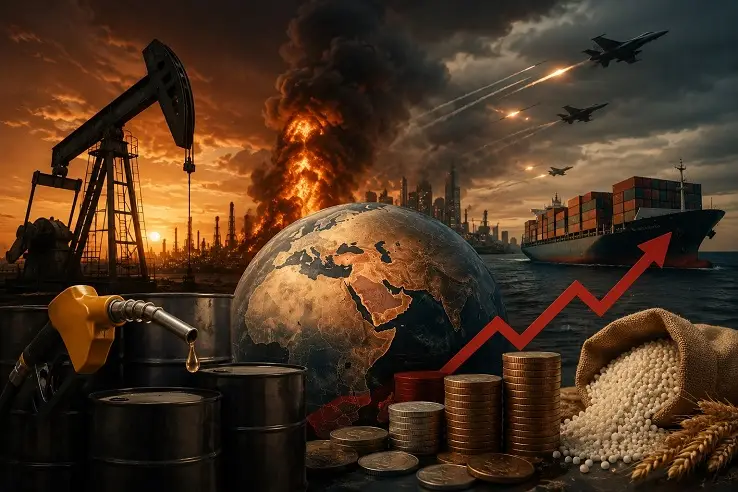
Image Credit: Bangkok Business News
The warning comes at a time when Thailand is already attempting to maintain economic momentum amid fragile global demand and uneven recovery across key industries. According to the latest economic assessment by the NESDC, the growing instability in the Middle East could become one of the most serious external threats facing Thailand in 2026. In the middle of heightened concern over global energy disruptions, this Bangkok Business News report highlights how deeply interconnected Thailand’s economy has become with developments unfolding thousands of kilometers away.
Energy Costs Emerging as the Biggest Threat
The most immediate concern centers on Thailand’s dependence on imported energy from the Middle East. The NESDC revealed that Thailand imported 46.8% of its total energy supplies from the region in 2025, including 59% of all crude-oil imports and 24.3% of natural-gas imports.
That level of dependency places Thailand in a highly vulnerable position whenever geopolitical tensions threaten global energy routes or reduce production capacity. Oil prices have already shown significant volatility in recent months, and any further escalation could quickly push domestic fuel prices higher despite government intervention measures.
Officials say rising energy costs could place extraordinary pressure on households because energy-related expenses account for around 14% of Thailand’s consumer price index, one of the highest proportions in Asia. This means Thai consumers are likely to feel the effects of rising oil prices more quickly and more intensely than consumers in several neighboring countries.
Businesses are also beginning to feel the pressure. Industries with heavy exposure to oil-based operating costs are expected to suffer the most severe impact. Fisheries, mining, quarrying, chemical manufacturing, electricity generation, water supply operations and metal production are among the sectors most vulnerable to sustained fuel-price increases.
Construction companies, cement manufacturers and wholesale businesses could also see operating expenses surge if energy prices remain elevated for a prolonged period. Economists warn that these additional costs will eventually be transferred to consumers through higher prices for goods and services, adding to inflationary pressure already affecting many households.
Supply Chains Facing Fresh Disruption Risks
Beyond fuel prices, Thailand’s industrial sector faces another major challenge through disruptions to petrochemical supply chains.
Thailand relies heavily on Middle Eastern imports for raw materials used across manufacturing and agricultural production. The NESDC said that Thailand imports more than 90% of its naphtha from the Middle East, alongside large quantities of propane, ethylene, propylene and helium.
These materials are critical for numerous industrial processes. Any interruption in supply could create shortages, delay manufacturing output and increase production costs for a wide range of industries.
Manufacturers that depend heavily on petroleum-based raw materials are considered especially exposed. Petrochemical factories, plastics producers and chemical-processing businesses may encounter severe operational difficulties if supplies tighten or prices continue climbing.
Analysts say Thailand’s industrial sector is particularly vulnerable because many manufacturers operate on narrow profit margins and depend on stable raw-material costs to remain competitive in export markets.
Fertilizer Supplies Raising Agricultural Concerns
Thailand’s agricultural sector is also coming under increasing pressure due to concerns surrounding fertilizer availability.
The NESDC disclosed that Thailand imports 71.4% of its urea fertilizer from the Middle East. The country also relies on overseas suppliers for more than 40% of its fertilizers and pesticides.
Officials warned that existing fertilizer reserves may only be sufficient until the end of August 2026 if supply disruptions continue.
As of mid-March 2026, Thailand reportedly held around 6.5 million sacks of urea fertilizer in reserve, equal to approximately 0.32 million tons. Additional imports in April slightly improved the stockpile to around 8.5 million sacks.
However, experts say those reserves could diminish rapidly if global supply chains tighten further or shipping routes become disrupted.
The potential consequences for Thai agriculture are significant. Higher fertilizer prices could increase production costs for farmers nationwide, especially rice growers and major crop producers who already face pressure from unpredictable weather conditions and fluctuating commodity prices.
Agricultural economists warn that prolonged fertilizer shortages could eventually affect crop yields, food prices and rural household incomes, creating broader economic strain throughout the country.
Export Markets and Tourism Showing Signs of Weakness
Thailand’s export sector could also face mounting difficulties if Middle Eastern economies slow due to conflict-related instability.
Thailand exported goods worth US$339.63 billion to Middle Eastern markets in 2025, accounting for 3.7% of total exports. Vehicles, auto parts and industrial equipment represented the largest export category, followed by jewelry, gems and air-conditioning products.
At the same time, imports from the Middle East reached US$344.94 billion, representing 8.1% of Thailand’s total imports.
Economists warn that weaker consumer confidence and reduced purchasing power across affected markets could weaken demand for Thai exports over the coming months.
The tourism sector is already beginning to show signs of stress. Tourists from the Middle East accounted for 3.7% of Thailand’s foreign arrivals in 2025, but these visitors are considered among the country’s highest-spending travelers.
Recent figures suggest the market may already be weakening. Middle Eastern tourist arrivals dropped to 32,815 in March 2026 before recovering only modestly to 45,990 in April.
Tourism revenue from the region during the first quarter of 2026 stood at 17.6 billion baht, representing a decline of 6.4%.
Industry observers say luxury hotels, shopping centers and premium tourism operators could face the greatest impact if high-spending travelers from the Middle East continue reducing travel activity.
Financial Markets Entering a More Volatile Phase
The NESDC also warned that global financial markets could become increasingly unstable if geopolitical tensions persist.
Investors worldwide have already started shifting money into safer assets, particularly those denominated in US dollars. This movement has strengthened the dollar while putting pressure on emerging-market currencies.
Stock markets across several countries have weakened as investors move away from higher-risk assets. Government bond yields have also risen due to concerns over inflation and tighter monetary conditions.
For Thailand, these developments could create additional pressure on borrowing costs, fiscal policy and investment activity.
Economists say prolonged inflation risks may force major central banks to maintain elevated interest rates for longer than expected, further tightening global financial conditions.
Emerging economies such as Thailand could face capital outflows, currency depreciation and reduced investor confidence if financial volatility worsens.
The NESDC noted that countries with weaker fiscal flexibility and limited economic buffers may struggle most severely in a prolonged crisis scenario.
Thailand, alongside Malaysia and the Philippines, was identified among countries that could face tighter fiscal constraints if global financial conditions deteriorate further.
Thailand Preparing for an Uncertain Economic Period
The latest assessment from the NESDC paints a picture of an economy entering a period of heightened uncertainty where external geopolitical developments could quickly translate into domestic economic pain.
While the government has introduced short-term measures to help stabilize energy prices and ease pressure on consumers, economists believe Thailand may need broader contingency planning if the Middle East conflict becomes more prolonged or expands further across the region.
The warning also underscores how vulnerable highly interconnected economies have become to geopolitical crises beyond their borders. Rising energy costs, weakening exports, tighter financial conditions and softer tourism demand could collectively slow Thailand’s economic momentum during the remainder of 2026.
Much will now depend on how long tensions persist and whether global markets can stabilize before inflationary pressures intensify further. Policymakers, businesses and consumers are all expected to monitor developments closely in the months ahead as Thailand navigates one of the most uncertain international economic environments in recent years.
For the latest on the Thai economy, keep on logging to Bangkok Business News.



