


What To Know
- Thai businesses face the prospect of higher shipping costs, longer delivery times, and increasingly unpredictable supply chains as the six-month conflict between the United States and Iran disrupts maritime traffic through the Strait of Hormuz.
- While the Gulf remains an important commercial market, this Bangkok Business News report shows that businesses may need greater flexibility in inventory and delivery planning to manage a logistics environment in which transport costs and transit times can change rapidly.
Thai businesses face the prospect of higher shipping costs, longer delivery times, and increasingly unpredictable supply chains as the six-month conflict between the United States and Iran disrupts maritime traffic through the Strait of Hormuz. The disruption is forcing shipping operators to consider longer alternative routes while rising war-risk insurance premiums and volatile fuel prices add another layer of costs for companies trading with the Gulf.
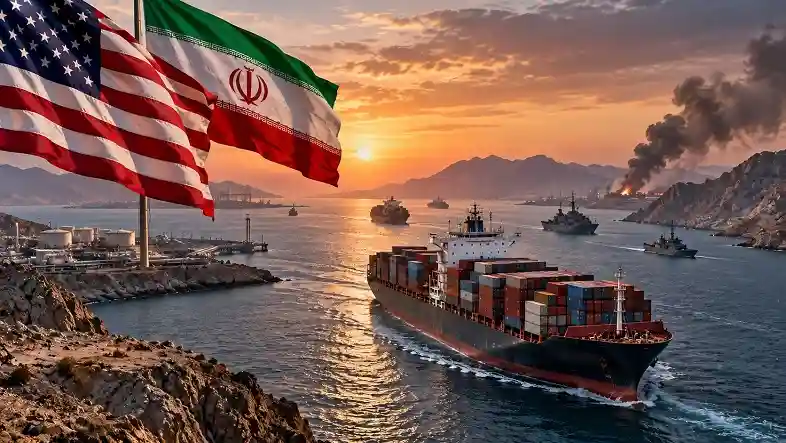
Image Credit: Bangkok Business News
The Department of International Trade Promotion’s Dubai office has warned Thai companies to closely monitor freight rates, insurance premiums, shipping routes, and regional security conditions as the disruption continues. While the Gulf remains an important commercial market, this Bangkok Business News report shows that businesses may need greater flexibility in inventory and delivery planning to manage a logistics environment in which transport costs and transit times can change rapidly.
Hormuz Disruption Reshapes Shipping Routes
At the center of the concern is the Strait of Hormuz, one of the world’s most strategically important maritime passages. Shipping traffic through the strait has fallen sharply during the conflict, prompting operators to seek alternative ports and transport routes to reduce their exposure to disruption.
According to DITP’s assessment, alternatives include Fujairah in the United Arab Emirates and Sohar, Duqm, and Salalah in Oman. These ports are located outside the Strait of Hormuz and can provide alternative gateways when movements through the waterway become more difficult.
Operators are also looking toward routes involving the Red Sea as they attempt to spread transportation risks.
However, diversions can come at a considerable cost. Longer routes mean greater sailing distances, potentially higher fuel consumption, additional operating expenses, and longer delivery periods. Shipping companies operating in or near areas affected by the conflict are also facing higher war-risk insurance premiums.
For Thai exporters and importers, those additional expenses can eventually translate into higher freight bills and increased overall import costs.
Fuel Prices Add Another Layer of Pressure
The Strait of Hormuz is important not only to container and commercial shipping but also to global energy supplies. Before the conflict, approximately one-fifth of global oil supplies passed through the strategic waterway.
Disruptions to oil shipments have contributed to higher oil and petroleum-product prices, with diesel prices particularly important for transportation and logistics businesses.
The DITP report estimated that damage to energy infrastructure across the region could reach $58 billion, while oil prices remain vulnerable to changing security conditions.
This creates a potentially compounding problem for international transportation. Shipping operators may have to travel farther while simultaneously paying more for fuel, insurance, and other operating expenses.
Thai businesses could consequently feel the effects through higher transportation charges even when individual shipments are not directly delayed by the conflict.
Thai-Gulf Trade Remains Significant
The risks are particularly relevant because trade between Thailand and Gulf Cooperation Council countries remains substantial.
Thailand’s two-way trade with GCC economies totaled $23.06 billion during the first seven months of 2026, according to DITP’s Dubai office.
Thai exports to the GCC were valued at $4.637 billion during the period, representing a decline of 1.4%. Imports moved sharply in the opposite direction, climbing 20.95% to $18.423 billion.
The figures demonstrate why developments affecting Gulf transportation networks matter to Thailand. Higher logistics expenses can influence the cost of imports while also making Thai exports more expensive to deliver to customers across the region.
Among the GCC economies, the UAE continues to hold particular importance for Thailand.
It remained Thailand’s largest export market in the GCC during January through July 2026, while bilateral trade increased by 26.87%.
Despite the additional uncertainty and transportation costs, DITP has therefore encouraged Thai businesses to maintain their commercial relationships in the UAE rather than retreat from the market.
UAE Remains Crucial for Thai Businesses
The UAE’s importance extends beyond its role as a destination for Thai products. It is also a major regional center for trade, logistics, distribution, aviation, and re-export activities.
That position means disruption to Gulf shipping can have consequences across interconnected regional supply chains.
DITP believes Thai companies should continue looking for opportunities in the UAE while simultaneously preparing for changing transportation conditions. Maintaining flexibility may become especially important for businesses selling products with high freight costs, narrow profit margins, or strict delivery requirements.
Companies dependent on imported raw materials could face similar pressures if transportation costs increase or shipments take longer to arrive.
Rather than relying on a single delivery assumption, businesses may need to consider alternative routes, inventory buffers, and more flexible delivery schedules.
Gulf Aviation Shows Signs of Recovery
The effects of the conflict have extended well beyond maritime transportation.
Gulf aviation initially suffered a substantial reduction in capacity. Passenger capacity among GCC airlines fell by more than one-third in April compared with the same period a year earlier.
The situation subsequently improved. By August, the year-on-year capacity shortfall had narrowed to approximately 5%.
Flight schedules cited by DITP indicated further recovery on several important international routes. Scheduled November seat capacity on Singapore and Sydney services was more than double April levels.
Capacity to New York increased 57%, while London and Milan each recorded increases of 39%. Paris capacity rose 28%.
The rebound suggests that airlines have been able to restore significant parts of their networks despite the wider regional uncertainty.
Tourism and Property Face Greater Strain
Tourism has faced more persistent difficulties.
The industry accounts for approximately one-eighth of UAE gross domestic product and supports almost one million jobs, making prolonged weakness particularly important for the wider economy.
DITP cited an estimate from the World Travel & Tourism Council that the Middle East was losing at least $600 million a day in visitor revenue.
Hotel occupancy and revenue per available room declined approximately 20% in the year through July. The GCC could also potentially lose around 137,000 tourism jobs during 2026.
Some leading Dubai hotels have used the quieter period to accelerate renovations and service upgrades. Restaurants, meanwhile, have faced the dual challenge of weaker customer numbers and higher costs for ingredients and transportation.
Property markets have also felt the uncertainty. Developers postponed some new project launches, while off-plan residential sales fell almost 90% between the first and second quarters.
Dubai nevertheless delivered approximately 27,000 homes during the second quarter, its highest quarterly total in five years.
Approximately 86,000 residential transactions were recorded between January and June, although that represented a decline of nearly 13% compared with the previous year.
Thai Firms Urged to Stay Flexible
For Thai companies, the most immediate issue remains the changing cost and reliability of moving goods.
DITP’s Dubai office has advised businesses to closely monitor security developments, shipping routes, freight rates, and insurance premiums while keeping inventory management and delivery schedules flexible.
The recommendation is particularly relevant for companies with expensive transportation requirements or operations dependent on imported supplies.
The UAE nevertheless remains an important market and a major distribution center for the wider Gulf. Maintaining existing commercial relationships while preparing for transportation disruption could therefore allow Thai businesses to protect established markets without ignoring the financial risks created by changing shipping conditions.
Six months of conflict have demonstrated how quickly disruption around the Strait of Hormuz can spread through international supply chains. For Thai companies, higher insurance premiums, longer routes, volatile fuel prices, and uncertain delivery schedules could combine to raise costs even when goods continue moving. Careful inventory management, flexible delivery arrangements, and close monitoring of freight conditions will therefore remain essential as businesses seek to preserve their presence in the UAE and wider GCC while managing the increased risks surrounding regional trade.
References:
https://www.ditp.go.th/post/edr4wpg41ohomw47u6rldzyl
https://www.ditp.go.th/post/xwdu0rrsckw67f7nijfc4lxl
https://www.ditp.go.th/post/mx53wzr3dj6nvzz5dskepcqp
https://www.ditp.go.th/post/k4m25jv0cgrkuoxg93u9rna5
https://www.ditp.go.th/post/ttij78k4ht6ioqmcs3z5b1vn



