


What To Know
- Thailand’s agricultural export industry is coming under increasing scrutiny following reports of arsenic and heavy metal contamination in northern rivers, with concerns mounting over the possible spread of toxic substances into farmland, food production facilities, and livestock operations.
- Arsenic contamination in northern Thailand’s rivers and suspected industrial waste dumping are raising concerns about agricultural safety and the country’s food export marketsImage Credit.
Thailand’s agricultural export industry is coming under increasing scrutiny following reports of arsenic and heavy metal contamination in northern rivers, with concerns mounting over the possible spread of toxic substances into farmland, food production facilities, and livestock operations. The contamination has raised serious questions about the safety of agricultural products originating from affected areas and the potential consequences for Thailand’s international food trade.
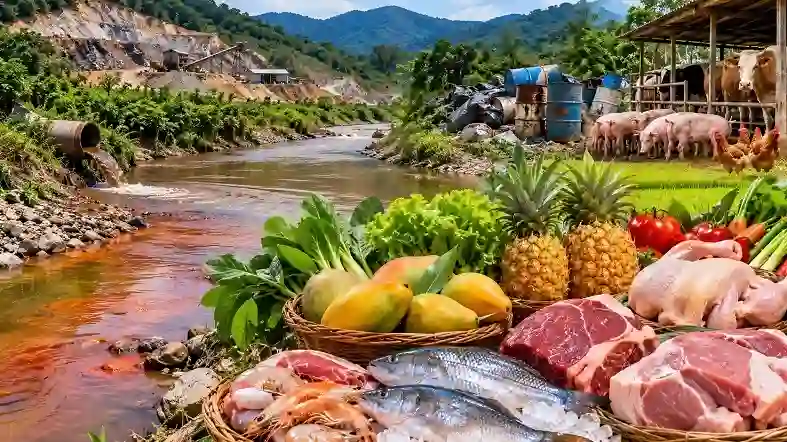
Image Credit: Bangkok Business News
The environmental crisis has been linked to mining operations in Myanmar’s Shan State, where wastewater containing hazardous substances is believed to be entering rivers flowing into northern Thailand. As this Bangkok Business News report highlights, the contamination has triggered concerns about irrigation water, agricultural soil, and possible exposure throughout the food production chain, including fruits, vegetables, poultry, pork, beef, and freshwater seafood.
Arsenic Pollution Spreads Concerns Across Northern Thailand
The Kok, Sai, and Ruak rivers have emerged as major areas of concern following the detection of elevated arsenic concentrations in water samples.
Mining operations across the Myanmar border have been identified as suspected sources of contamination, with polluted water flowing downstream into agricultural communities in Chiang Rai and neighboring areas.
Farmers relying on river water for irrigation face uncertainty over whether prolonged exposure could lead to arsenic accumulation in agricultural soils.
Rice, vegetables, fruits, and other crops grown using potentially contaminated water are among the agricultural products attracting attention.
The extent to which arsenic has entered harvested crops remains subject to testing, with contamination levels varying according to location, soil conditions, and agricultural practices.
Poultry, Pork, Beef, and Seafood Industries Face Questions
Concerns surrounding contaminated water supplies have extended to Thailand’s livestock and aquaculture industries.
Poultry farms, pig farms, and cattle operations could face exposure where contaminated water is used for drinking, cleaning, or growing animal feed.
Freshwater fish farms and other aquaculture businesses dependent on affected waterways could also face potential contamination risks.
Although widespread contamination of Thai meat and seafood products has not been confirmed, the possibility of hazardous substances entering animal production systems has increased calls for more extensive testing.
Illegal Toxic Waste Dumping Adds to Agricultural Safety Fears
Reports of suspected illegal industrial waste dumping in several Thai provinces have added another dimension to the country’s environmental problems.
Investigations involving industrial waste sites and materials bearing Chinese markings have raised concerns about the possible involvement of Chinese-linked operators in improper hazardous waste disposal.
The discovery of suspected industrial waste near agricultural communities has generated fears about toxic substances entering groundwater, irrigation channels, and surrounding farmland.
Heavy metals and other industrial contaminants can remain in soil for extended periods, creating potential long-term problems for agricultural production and food safety.
European, Australian, and Middle Eastern Countries Placing Food Imports from Thailand Under Greater Scrutiny
Thailand’s agricultural exporters are facing uncertainty over the possibility of additional food safety inspections in overseas markets.
Reports and rumors concerning possible restrictions by European countries, Australia, and Middle Eastern importers have circulated amid the contamination concerns.
However, comprehensive import bans targeting Thai agricultural products have not yet been officially confirmed by these markets.
Any introduction of additional contamination testing or stricter import certification could affect exporters supplying fresh fruits, vegetables, meat, seafood, and processed agricultural products.
Thailand’s agricultural sector depends heavily on international confidence in its food safety standards, making contamination concerns particularly sensitive for businesses serving overseas markets.
Government Efforts Focus on Contamination Monitoring
Thai authorities have been investigating pollution in northern waterways while pursuing discussions concerning suspected cross-border mining contamination.
Government agencies are also under pressure to strengthen inspections of industrial waste disposal sites and monitor agricultural production areas potentially exposed to hazardous substances.
The growing environmental concerns have placed renewed attention on Thailand’s food testing systems, agricultural traceability, and enforcement of industrial pollution regulations.
For farmers and exporters, the immediate concern remains whether contamination can be contained before it affects additional production areas or triggers more extensive overseas import restrictions. The coming months could prove particularly important for Thailand’s agricultural sector as authorities investigate pollution sources, determine whether hazardous substances have entered food supplies, and work to maintain international confidence in Thai agricultural exports.


