


What To Know
- Thailand’s northern property market is entering a period of restraint as developers cut back on new launches and turn their attention to an increasingly urgent problem.
- Chiang Mai, the region’s biggest property center, is at the heart of the challenge, with current sales rates suggesting its remaining housing inventory could take more than four years to clear.
Thailand’s northern property market is entering a period of restraint as developers cut back on new launches and turn their attention to an increasingly urgent problem: how to sell thousands of homes already sitting on the market. Chiang Mai, the region’s biggest property center, is at the heart of the challenge, with current sales rates suggesting its remaining housing inventory could take more than four years to clear.
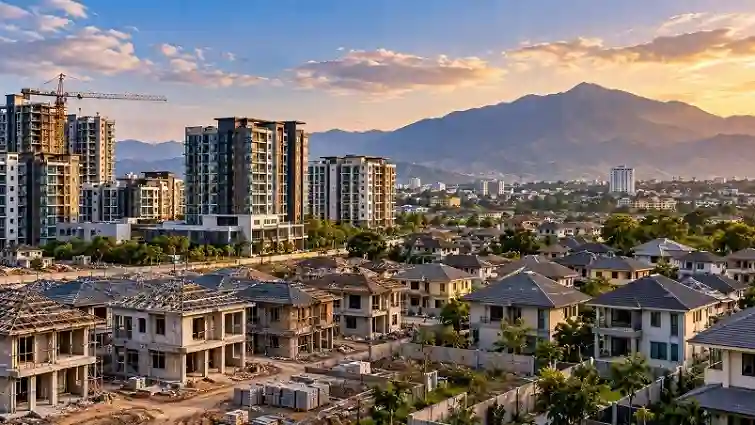
Image Credit: Bangkok Business News
The slowdown is not simply the result of too many homes being built. Weak household purchasing power, high debt and strict mortgage lending standards are preventing many prospective buyers from turning interest into completed purchases. In the middle of this changing market, this Bangkok Business News report finds that developers are increasingly prioritizing cash flow and inventory reduction over expansion, even as selected locations and condominium projects begin to show signs of recovery.
Northern Developers Shift from Expansion to Survival
Figures from the Real Estate Information Center (REIC) of the Government Housing Bank show that the housing market across five major northern provinces remained uneven during the first half of 2026.
The survey covered Chiang Mai, Lamphun, Chiang Rai, Phitsanulok and Nakhon Sawan, where overall new housing supply declined by approximately 9%.
The reduction signals an important strategic change. Developers that previously competed through new launches are becoming considerably more selective as accumulated inventory ties up capital and slower sales increase financial pressure.
Mana Nimitvanich, director of REIC, described the situation as an era of “stock management,” with developers increasingly needing to convert existing inventory into cash.
Government measures continue to provide some support to the property sector, but high household debt and restrictive lending conditions remain major barriers. As a result, even markets showing higher sales may require considerable time to absorb homes accumulated during earlier development cycles.
Chiang Mai Faces a 50-Month Property Overhang
Chiang Mai produced some of the strongest signs of recovery among the five provinces, particularly in condominiums. However, the size of its unsold inventory means the market remains far from fully balanced.
Total housing supply reached 12,715 units during the first half of 2026, an increase of 12.7% from a year earlier. The combined value climbed 16.3% to 60.091 billion baht.
New supply surged 189.4%, while new sales increased 18.5%. The value of new sales reached 5.79 billion baht, representing growth of 23.4%.
Condominiums clearly outperformed the broader market. Condo sales increased 49.4%, compared with growth of only 9% for housing-estate projects.
Yet Chiang Mai still had 11,353 units of remaining supply, 12% more than a year earlier. With an average monthly absorption rate of only 1.8%, that inventory would require approximately 50 months—or more than four years—to clear if sales continued at the same pace.
The imbalance is also significantly greater in low-rise housing. Condominium inventory would take an estimated 39 months to absorb, compared with approximately 55 months for housing estates.
Chiang Mai’s Property Map Is Being Redrawn
The figures also reveal a changing geographical pattern in Chiang Mai’s property market.
Development and residential demand are spreading beyond the traditional city center as Chiang Mai increasingly evolves into a multi-center or “network city.” San Sai, San Kamphaeng and Hang Dong are becoming more established residential locations, supported by expanding commercial facilities and services.
For condominiums, inner Chiang Mai and the Suthep-Mae Hia area were particularly active, recording combined sales of 500 newly launched units.
San Sai emerged as another location to watch. Sales of low-rise homes there increased 62.4%, while the monthly absorption rate reached 2.3%. At that rate, remaining inventory would require approximately 38 months to clear.
Other locations face a far more difficult situation.
Housing estates in central Chiang Mai and around the Payap University area have accumulated particularly large inventories. Depending on the location, existing supply could take between 163 and 380 months to absorb if current sales rates persist.
Those extraordinary clearance periods demonstrate how dramatically property conditions can differ even within the same provincial market.
Foreign Buyers Help Drive Chiang Mai Condo Revival
Foreign demand is providing additional momentum to Chiang Mai’s condominium sector, alongside Thai buyers attracted to an urban lifestyle.
Transfers of new condominiums increased by nearly 50% in unit terms and almost 80% by value, suggesting that this part of the market is moving closer to a healthier balance between supply and demand.
The picture is considerably less encouraging for expensive low-rise properties, including larger houses and pool villas.
Supply in these upper-end segments has increased while sales have weakened, causing unsold inventory to accumulate. Developers targeting affluent buyers are therefore likely to become more cautious about launching additional projects until existing homes are absorbed.
Phitsanulok Sales Jump but Inventory Remains Stubborn
Phitsanulok is also displaying clearer signs of recovery, although its stock overhang remains substantial.
New supply plunged 91.4% from a year earlier, while new sales increased 61.4%. Total supply stood at 3,577 units, an increase of 8.7%, with a combined value of 14.592 billion baht, up 6.1%.
Remaining inventory was still 6% higher, but stronger sales helped lift the average monthly absorption rate to 1.2%.
As a result, the estimated period required to clear inventory dropped from 119 months to 78 months. That is a substantial improvement, although it still represents six and a half years of supply at the current absorption rate.
Central Phitsanulok performed especially strongly. Sales of housing-estate units increased 405.9% to 86 units, while monthly absorption reached 3.8%. Remaining stock there could consequently be cleared in approximately 20 months.
Conditions were much weaker in Bueng Phra and the Naresuan University-Tha Thong area, where monthly absorption stood at just 0.2%-0.3%.
At those rates, existing inventory could require between 367 and 452 months to sell.
Chiang Rai Cuts New Supply as Stock Pressure Persists
Developers in Chiang Rai are already responding aggressively to the inventory problem.
Total supply reached 3,020 units, up 8.6%, with a combined value of 11.772 billion baht, representing an increase of 8.9%.
However, new supply was slashed 43.3% to only 68 units, all of which were low-rise homes.
New sales increased 22.9%, but that improvement was insufficient to reduce the overall inventory burden. Remaining supply rose 7.8% to 2,843 units.
With an average monthly absorption rate of only 1%, Chiang Rai is carrying approximately 96 months—or eight years—of housing inventory at the current pace.
Mae Sai offered a brighter picture, with its absorption rate improving to 2.3% and its estimated clearance period falling to approximately 37 months.
The airport-Mae Fah Luang University zone remains more problematic. Despite relatively consistent sales, large inventories have kept monthly absorption at just 0.8%, equivalent to approximately 120 months of supply.
Lamphun Emerges as the Region’s Fastest-Clearing Market
Smaller neighboring Lamphun presents a striking contrast to the heavier inventory burdens elsewhere.
Total supply declined 17.7% to 979 units, with a combined value of 2.55 billion baht. New supply dropped 73%, while new sales declined 22.4%.
Despite weaker sales, remaining supply fell 16.5% to 795 units.
Lamphun achieved an average monthly absorption rate of 3.1%, giving it an estimated inventory-clearance period of only 26 months—the shortest among the five northern provinces surveyed.
The Lamphun Industrial Estate-Ban Ma area performed particularly strongly, recording monthly absorption of 4%. At that rate, remaining supply could be cleared in approximately 19 months.
Lamphun’s experience illustrates the importance of controlling new development when demand is limited. Reducing incoming supply can allow an existing inventory backlog to decline even without dramatic sales growth.
Nakhon Sawan Freezes Launches as Sales Collapse
Nakhon Sawan presents another warning for developers. No new projects were launched during the survey period, yet weak demand meant the existing inventory remained difficult to absorb.
Total supply declined 22.6% to 1,347 units, valued at 6.858 billion baht.
More concerning was the performance of new sales, which plunged 77%. Remaining supply declined by only 2.5% to 1,239 units.
The average monthly absorption rate dropped to 1.3%, leaving approximately 69 months of inventory.
Tha Thong was the strongest location for housing-estate developments, while the Dreamland area remained under considerably greater pressure.
Sales in Dreamland fell 86.2%, while monthly absorption dropped to just 0.7%. At that rate, remaining inventory could take approximately 139 months to clear.
Buyers Want 2-3 Million Baht Homes but Credit Blocks Sales
One of the northern market’s biggest contradictions is that demand has not disappeared.
Homes priced between 2 million and 3 million baht continue to attract buyers, suggesting affordable housing remains commercially viable. The difficulty is converting that demand into completed transactions.
Strict mortgage standards mean many prospective buyers cannot secure sufficient financing, particularly when existing household debt reduces their borrowing capacity.
REIC recommends developers work with financial institutions earlier in the sales process, including screening potential customers and arranging mortgage pre-approval before accepting reservations.
Developers may also need to adjust their product mix toward prices more closely aligned with actual purchasing power.
The challenge is therefore shifting from whether consumers want to purchase homes to whether banks are prepared to finance them.
Second-Hand Homes Become a Bigger Threat
Developers are simultaneously facing stronger competition from Thailand’s second-hand housing market, which is expanding at roughly four times the pace of the new-home sector.
Price is a crucial advantage. Existing homes can frequently be purchased for less than comparable newly developed properties, making them increasingly attractive to households struggling with affordability and financing.
That means developers are no longer competing solely against other new projects. They are competing against a growing pool of resale homes that may offer buyers more space or a better location at a lower price.
Smaller developers could face particular pressure because they generally have less financial flexibility to carry inventory for extended periods.
Clear product differentiation, practical designs, competitive pricing, financing assistance and stronger value propositions will therefore become increasingly important.
Northern Property Recovery Hinges on Inventory Discipline
The northern housing market has begun to recover from its weakest period, but the enormous differences in absorption rates show why developers remain cautious. Chiang Mai’s improving condominium market, Lamphun’s relatively rapid stock reduction and stronger sales in parts of Phitsanulok demonstrate that demand can return when location, product and pricing align with buyers’ needs.
At the same time, clearance periods stretching from four years in Chiang Mai to eight years in Chiang Rai—and dramatically longer in some individual districts—show that the accumulated supply problem cannot be solved quickly. The next phase of the market will depend less on launching additional projects and more on disciplined inventory management, realistic pricing, access to mortgage financing and developers’ ability to match new housing with what consumers can genuinely afford. Until household purchasing power strengthens and lending conditions become more accommodating, northern Thailand’s property recovery is likely to remain highly selective, with successful locations advancing while heavily supplied areas continue working through years of unsold stock.



