


What To Know
- According to this Bangkok Business News report, the selling pressure reflected growing unease over technology valuations, possible changes in US regulations, and uncertainty surrounding future spending on AI infrastructure.
- The coming trading sessions will help determine whether the turmoil represents a temporary valuation correction or the beginning of a deeper reassessment of the technology sector.
A brutal sell-off on Wall Street has sent shockwaves through Asia’s financial markets, battering technology stocks and raising fresh concerns about the sustainability of the artificial intelligence investment boom. With reports pointing to approximately $2.5 trillion in lost market value, investors are confronting an uncomfortable question: have expectations for AI-driven growth raced too far ahead of economic reality?
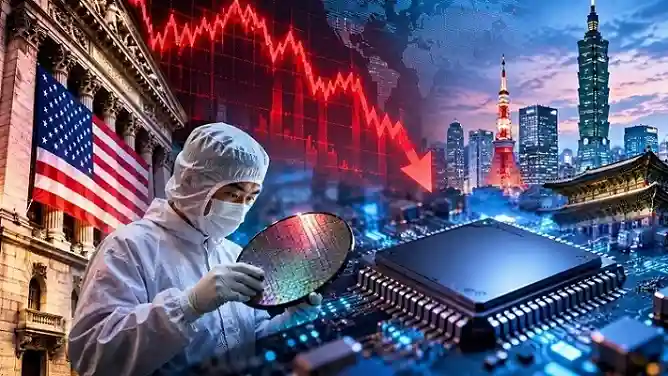
Image Credit: Bangkok Business News
The turmoil intensified on November 6, 2026, as major Asian stock exchanges suffered sharp losses following a dramatic retreat in American equities. According to this Bangkok Business News report, the selling pressure reflected growing unease over technology valuations, possible changes in US regulations, and uncertainty surrounding future spending on AI infrastructure. The upheaval demonstrated how quickly investor anxiety in New York can spread across Asia’s semiconductor manufacturing centers.
South Korea and Japan Face Heavy Selling
South Korea emerged as one of the hardest-hit markets, with reports describing a plunge of nearly 9% in the Kospi index. The decline highlighted the vulnerability of major memory-chip producers to changes in global technology investment.
Japan also experienced substantial selling pressure. The Nikkei 225 reportedly fell more than 6% during Friday’s session, as investors reduced exposure to technology companies and other risk-sensitive assets.
Concerns about currency movements and leveraged investment positions added another layer of uncertainty, although their precise contribution to the latest decline remains unclear.
Taiwan’s Chip Industry Caught in the Storm
Taiwan’s semiconductor industry faced similar pressure as investors reassessed the extraordinary expectations surrounding advanced chip production.
Taiwan Semiconductor Manufacturing Company, the world’s leading contract chipmaker, became a focal point of the downturn. Its importance extends far beyond Taiwan because its manufacturing operations support smartphones, high-performance computing, and sophisticated AI processors.
Sharp movements in semiconductor shares consequently carry implications for technology manufacturers throughout Asia, including businesses dependent on electronics exports and international supply chains.
US Political Changes Fuel AI Investment Fears
The sell-off followed the US midterm elections, with investors weighing whether the changing political landscape could introduce tougher oversight of artificial intelligence companies and data center development.
Potential regulatory restrictions could complicate expansion plans for technology giants investing billions of dollars in computing infrastructure.
However, regulatory concerns do not necessarily indicate an immediate collapse in AI demand. Investors are also questioning whether future revenues will justify the enormous capital expenditures already being committed.
Markets Search for Stability
Despite the widespread losses, attention is turning toward whether lower valuations could attract bargain hunters and stabilize regional equities.
For Thailand and neighboring economies, prolonged weakness in global technology investment could affect export sentiment, electronics manufacturing, and broader investor confidence.
The coming trading sessions will help determine whether the turmoil represents a temporary valuation correction or the beginning of a deeper reassessment of the technology sector. Although long-term demand for advanced computing remains significant, the latest market turbulence demonstrates that even industries with powerful growth prospects are vulnerable to political uncertainty, expensive valuations, and sudden shifts in investor confidence.


