


What To Know
- The government is now weighing a plan to raise the country’s public debt ceiling from 70% to 75% of GDP, a move that could unlock close to 1 trillion baht in additional borrowing capacity to counter rising economic risks.
- This Bangkok Business News report highlights that the proposed steps are part of a broader strategy to shield Thailand from the ripple effects of the escalating Middle East conflict, particularly surging energy costs and tightening fiscal conditions.
Bangkok Business News: Thailand’s economic policymakers are preparing a sweeping fiscal response as mounting global tensions threaten to spill into domestic stability. The government is now weighing a plan to raise the country’s public debt ceiling from 70% to 75% of GDP, a move that could unlock close to 1 trillion baht in additional borrowing capacity to counter rising economic risks.
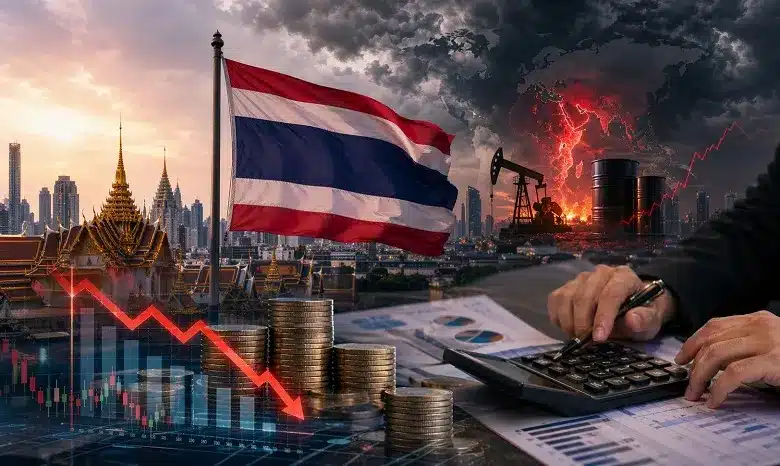
Image Credit: Bangkok Business News
At the same time, authorities are exploring the possibility of issuing an emergency borrowing decree, echoing measures deployed during the COVID-19 crisis, to raise hundreds of billions of baht for urgent interventions. This Bangkok Business News report highlights that the proposed steps are part of a broader strategy to shield Thailand from the ripple effects of the escalating Middle East conflict, particularly surging energy costs and tightening fiscal conditions.
Fiscal Pressure Mounts as Crisis Deepens
Government insiders reveal that the Prime Minister has ordered a major overhaul of the 2026 fiscal budget to create what officials describe as “financial ammunition.” With only about 25 billion baht left in the central contingency budget and borrowing headroom slightly above 700 billion baht, current resources are widely viewed as insufficient for the scale of potential interventions required.
Among the immediate steps under consideration is a budget transfer bill that would reallocate funds from delayed or underutilized projects back into central reserves. This could free up tens of billions of baht in the short term. Additionally, around 50 billion baht may be drawn from contingency reserves under existing budget laws to stabilize the situation.
New Stimulus Plans Take Shape
A key pillar of the government’s response is a proposed “Thai Helps Thai Plus” programme. This initiative aims to cushion households and businesses through targeted subsidies, including energy price support, cost-of-living assistance, and continued welfare schemes such as co-payment programs and state welfare cards.
However, officials acknowledge that even these combined measures may fall short. As a result, the government is preparing contingency plans for emergency borrowing, albeit at a scale smaller than previous trillion-baht pandemic packages.
Rising Risks of Stagflation
Economic signals are already flashing warning signs. Consumer confidence has dropped to a six-month low, reflecting growing anxiety over rising living costs and uncertain global conditions. The surge in oil prices—driven by geopolitical instability—has intensified fears of stagflation, where inflation rises even as economic growth slows.
Finance authorities warn that the era of cheap energy may not return anytime soon, with global supply disruptions expected to persist for at least one to two years. This outlook is forcing Thailand to rethink both its short-term crisis management and long-term economic structure.
Balancing Urgency with Discipline
While raising the debt ceiling could provide critical breathing room, officials stress that such a move must be accompanied by transparency and fiscal discipline. Clear communication on how funds will be used will be essential to maintain investor confidence and safeguard the country’s credit standing.
Thailand now finds itself at a pivotal crossroads, where swift action is required to protect vulnerable populations and stabilize the economy. At the same time, policymakers must ensure that emergency measures do not undermine long-term fiscal sustainability. The coming months will test the government’s ability to strike this delicate balance while navigating one of the most complex global economic environments in recent years.
For the latest on the Thai Economy, keep on logging to Bangkok Business News.



