

What To Know
- The move forms part of a sweeping new US trade framework affecting 60 major trading partners and is expected to reshape global trade dynamics while placing fresh pressure on Thailand to strengthen labor protections and accelerate trade negotiations.
- While acknowledging that countries receiving the lower 10% duty could enjoy a modest pricing advantage, he said the gap is considerably narrower than under previous proposals and is unlikely to significantly undermine Thailand’s overall competitiveness in the US market.
Bangkok Business News: The United States has introduced a new 12.5% tariff on imports from Thailand, placing the kingdom among a group of countries facing tougher trade measures over concerns surrounding the enforcement of forced labor regulations. The move forms part of a sweeping new US trade framework affecting 60 major trading partners and is expected to reshape global trade dynamics while placing fresh pressure on Thailand to strengthen labor protections and accelerate trade negotiations.

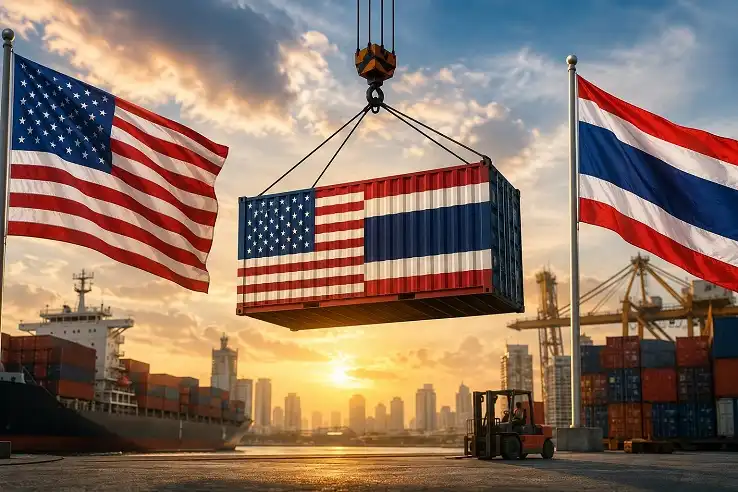
Image Credit: Bangkok Business News
The tariffs officially took effect at 12.01am US Eastern Time on July 24, replacing a temporary 10% global levy that had been in place under previous emergency measures. This Bangkok Business News report examines how the latest decision could influence Thailand’s export outlook, labor standards and long-term competitiveness, even as many business leaders remain cautiously optimistic that the immediate commercial impact will be manageable because competing exporting nations are facing similar treatment.
Thailand Placed Among Higher-Tariff Nations
Under the final determination issued by the Office of the United States Trade Representative, Thailand joins China and Vietnam among 38 trading partners assigned the higher 12.5% tariff rate. According to Washington, these countries were placed in the higher category because their restrictions and enforcement against forced labor were deemed insufficient.
By comparison, 17 countries—including Britain, Canada, India, Indonesia, Malaysia, Mexico and Pakistan—were assigned the lower 10% tariff after being judged to have more adequate legal frameworks prohibiting forced labor.
The European Union, Japan, South Korea, Taiwan and Switzerland will also face additional duties that bring their combined tariff levels, including existing most-favored-nation tariffs, to either 10% or 12.5%.
New Trade Measures Replace Temporary Tariffs
The latest duties cover approximately 99.4% of US imports, although several product categories remain exempt. Oil and gas, fertilizer, selected food products and a number of other goods are excluded from the new regime.
Products already subject to Section 232 national-security tariffs—including automobiles, steel, aluminium and copper—will also remain outside the scope of the latest measures. Goods already in transit before implementation are exempt until July 28 under the transition arrangements announced by US authorities.
Washington introduced the tariffs under Section 301 of the Trade Act of 1974 after the US Supreme Court ruled earlier this year that previous reciprocal tariffs imposed under emergency powers exceeded presidential authority. A temporary tariff implemented under Section 122 subsequently expires as the new Section 301 duties take effect.
Washington Cites Labor Enforcement Concerns
US Trade Representative Jamieson Greer said the United States has enforced restrictions against imports made with forced labour for nearly a century and expects its trading partners to adopt comparable standards.
The US administration argues that countries failing to adequately enforce forced labor bans gain an unfair commercial advantage over American businesses, where imports suspected of being produced through forced labor are subject to significantly stricter scrutiny.
Officials also rejected suggestions that the new duties merely replace the expiring temporary tariff, insisting the measures stem from a detailed investigation into labor policies that allegedly place US industries at a competitive disadvantage.
Thai Business Community Remains Calm
Despite the higher tariff classification, Thailand’s private sector has largely responded with measured optimism.
Poj Aramwattananont, chairman of the Thai Chamber of Commerce, said Thailand’s competitive position may not change dramatically because many rival exporting countries are facing similar tariff rates.
While acknowledging that countries receiving the lower 10% duty could enjoy a modest pricing advantage, he said the gap is considerably narrower than under previous proposals and is unlikely to significantly undermine Thailand’s overall competitiveness in the US market.
He also noted that the latest US trade measures focus heavily on forced labor concerns and manufacturing overcapacity rather than broader protectionist policies.
Calls for Stronger Labor Standards
Business leaders believe Thailand has not experienced a widespread systemic forced labor problem for many years. Nevertheless, they argue that the country should strengthen both legislation and enforcement to increase confidence among international trading partners.
The Thai Chamber of Commerce believes accelerating reforms would help Thailand align with international labor standards while improving its prospects for obtaining more favorable treatment under future US trade reviews.
Industry representatives also stressed the importance of improving transparency throughout manufacturing supply chains to demonstrate full compliance with labor regulations.
Exporters Face Continued Uncertainty
Although many businesses welcomed the fact that the final tariff rate came in lower than some earlier proposals, exporters continue to express concern over the unpredictability of US trade policy.
Dhanakorn Kasetrsuwan, chairman of the Thai National Shippers’ Council, described the 12.5% tariff as a significant additional cost burden despite being lower than initially anticipated.
He warned that uncertainty surrounding future US trade decisions has become an even greater concern than the tariff itself, with many overseas buyers delaying purchase orders while waiting for greater policy clarity.
Such uncertainty has made production planning increasingly difficult for Thai exporters attempting to manage inventories, pricing strategies and long-term investment decisions.
Trade Negotiations Seen as Essential
Business organizations are urging the Thai government to accelerate negotiations with Washington while simultaneously expanding access to alternative export markets.
The Thai National Shippers’ Council recommends reducing reliance on any single export destination by increasing commercial engagement with fast-growing markets including India, the Middle East, Africa and Latin America.
At the same time, industry leaders believe Thailand should continue pursuing reciprocal trade agreements capable of lowering trade barriers and strengthening long-term export competitiveness.
According to Mr Poj, closer cooperation between government agencies and the private sector will be essential in preparing Thailand’s negotiating strategy to achieve mutually beneficial outcomes with the United States.
Manufacturers Highlight Compliance Efforts
The Federation of Thai Industries maintains that Thai manufacturers already comply with both national labor protection laws and internationally recognized labor rights standards.
Chairwoman Pimjai Leeissaranukul said exporters should continue allowing manufacturing facilities to be inspected by overseas trading partners while strengthening product traceability throughout the supply chain.
She believes enhanced transparency covering both finished goods and raw materials would reinforce confidence among US authorities and strengthen Thailand’s position during future trade negotiations.
Mrs Pimjai also emphasized that Thailand should avoid becoming overly dependent on any individual export market by pursuing broader international diversification strategies.
US Remains a Critical Export Destination
The United States continues to represent one of Thailand’s most valuable export markets.
According to figures cited by the Federation of Thai Industries, Thai exports to the United States reached US$38 billion during the first five months of 2026, representing year-on-year growth of 40%.
Given the importance of the American market, industry groups believe maintaining constructive dialogue with US authorities while improving labor governance and strengthening supply chain transparency will be vital for preserving Thailand’s long-term export performance.
Rather than viewing the latest tariffs solely as a setback, many business leaders argue they should serve as an incentive for Thailand to modernize labor enforcement, enhance international confidence and pursue broader market diversification. They believe stronger compliance with internationally recognized labor standards, combined with expanded trade agreements and continued engagement with Washington, could ultimately reinforce Thailand’s competitiveness despite the immediate challenges posed by the new US tariff regime. As negotiations continue, the ability of government and industry to work together will likely determine how effectively Thailand responds to one of its latest international trade tests.
For the latest on Trumps taxes on Thailand and other countries, keep on logging to Bangkok Business News.