

What To Know
- In a bold escalation of global trade tensions, US President Donald Trump has announced plans to impose 100 percent tariffs on Chinese imports beginning November 1, 2025—a move that could reignite a new trade war, slow global growth, and throw Thailand’s economic balance off course.
- This Bangkok Business News report highlights how Thailand, already running a large trade deficit with China, may face intensified pressure from disrupted supply chains and shifts in regional trade flows.
Bangkok Business News: In a bold escalation of global trade tensions, US President Donald Trump has announced plans to impose 100 percent tariffs on Chinese imports beginning November 1, 2025—a move that could reignite a new trade war, slow global growth, and throw Thailand’s economic balance off course.
This Bangkok Business News report highlights how Thailand, already running a large trade deficit with China, may face intensified pressure from disrupted supply chains and shifts in regional trade flows.

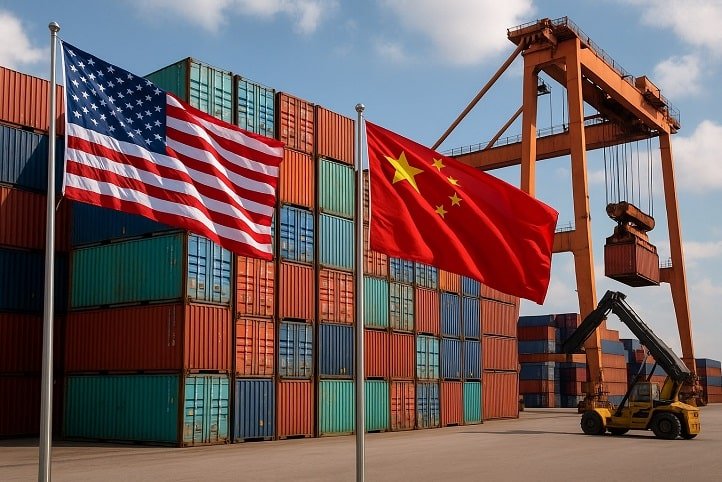
Tariff shockwaves from Washington ripple through Bangkok export gears
Image Credit: AI-Generated
Global Shockwaves and Thailand’s Exposure
Trump says the decision is aimed at countering China’s dominance in processed rare earths, which are essential to the US tech sector. Analysts warn that doubling current tariff levels (around 51 percent in many cases) may cripple industry margins, hike inflation, and slow investment across markets.
For Thailand, the consequences are stark. In the first eight months of 2025, the trade deficit with China reached 1.37 trillion baht, and projections suggest it could balloon to 1.7 trillion baht by year-end. Should China redirect exports toward Southeast Asia, Thai manufacturers could be squeezed—especially in industries that compete directly or use Chinese components.
Winners, Losers, and the Export Pivot
Some Thai sectors may find unexpected opportunity. Exports like electronics, automobiles, and processed food could gain traction in markets left underserved by Chinese exports. Yet, industries dependent on Chinese inputs—for chemicals, plastics, or electronics parts—risk seeing margins shrink or orders decline.
Experts caution that Thailand cannot remain passive. Adapting swiftly means expanding into new markets, investing in higher-value sectors, and enhancing supply chain resilience to buffer against external shocks.
Policy Levers and Strategic Moves
Thailand’s policymakers face a difficult balancing act. Efforts to encourage diversification of export partners, incentives for import substitution, and support for R&D and innovation are likely to accelerate. Export promotion agencies, trade negotiators, and industry bodies will have to coordinate swiftly to safeguard vulnerable sectors.
Still, even robust internal planning may not fully insulate Thailand from fallout. The interconnectedness of global trade means disruptions elsewhere—in China, the US, or Southeast Asia—could cascade into Thai markets.
Even though the United States is not directly targeting Thailand, the structural shift triggered by its tariff gamble will ripple deeply through regional trade networks. Thailand’s resilience will hinge on bold policy, strategic foresight, and swift adaptation.
For the latest on the Thai business markets, keep on logging to Bangkok Business News