


What To Know
- Officials in Washington said the investigations are being carried out under Section 301 of the Trade Act of 1974, a powerful legal mechanism that allows the Office of the United States Trade Representative (USTR) to examine foreign trade practices and impose tariffs or other retaliatory measures if they are deemed unfair.
- The announcement reflects a broader attempt to restore leverage in global trade negotiations after the US Supreme Court struck down a key tariff strategy previously used by the administration.
Bangkok Business News: Washington Revives Aggressive Trade Enforcement
The United States has launched sweeping trade investigations against 16 major trading partners, including Thailand, as Washington attempts to revive tariff pressure following a major legal setback that weakened one of its most aggressive trade tools. The move signals a renewed effort by the US administration to examine what it claims are structural trade distortions that harm American manufacturers and deepen global trade imbalances.
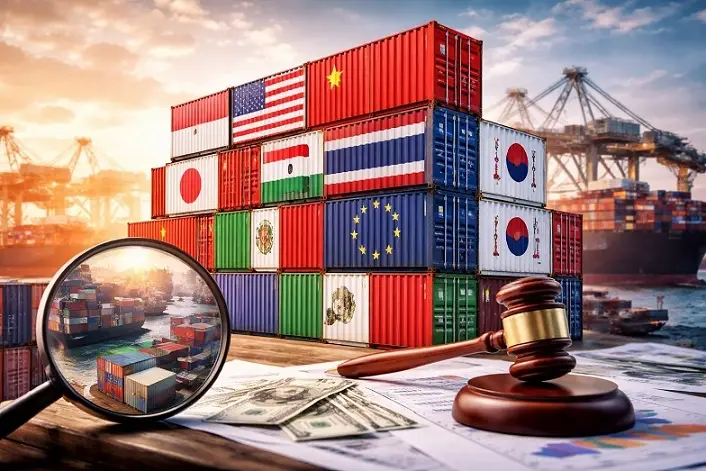
Image Credit: Bangkok Business News
Officials in Washington said the investigations are being carried out under Section 301 of the Trade Act of 1974, a powerful legal mechanism that allows the Office of the United States Trade Representative (USTR) to examine foreign trade practices and impose tariffs or other retaliatory measures if they are deemed unfair. The announcement reflects a broader attempt to restore leverage in global trade negotiations after the US Supreme Court struck down a key tariff strategy previously used by the administration. As policymakers scramble to maintain trade pressure through alternative legal routes, this Bangkok Business News report underscores how Washington is rapidly reshaping its enforcement approach.
Sixteen Economies Under Investigation
The new investigation covers a wide range of economies that collectively represent a significant portion of global manufacturing and exports. Among those named are China, India, Japan, South Korea, Mexico, Taiwan, Vietnam and the European Union, alongside Thailand, Malaysia, Indonesia, Cambodia, Singapore, Bangladesh, Switzerland and Norway.
According to US officials, the probe will focus on whether government policies in these economies have enabled companies to produce far more goods than global demand would normally justify. Washington argues that such excess capacity can distort international markets by pushing large volumes of low-priced exports into global supply chains, thereby putting pressure on American manufacturers and workers.
US Trade Representative Jamieson Greer said the investigation will examine structural indicators such as persistent trade surpluses, underutilized production facilities and state-backed industrial policies. Particular attention will also be given to subsidies, low-cost lending and support for state-owned enterprises that could provide foreign manufacturers with an advantage over US firms.
Manufacturing Capacity and Global Supply Chains
The investigation is also expected to scrutinize the rapid expansion of manufacturing capacity in key industries such as automobiles and advanced technologies. Officials in Washington have expressed concern that large-scale industrial expansion in some countries may not be driven by normal market demand but by state-supported policies designed to capture global market share.
One example cited by US officials involves the electric vehicle sector, where Chinese manufacturer BYD has aggressively expanded production capacity and established factories across multiple countries, including Thailand. The company has also invested in manufacturing sites in Brazil, Hungary and Turkey while planning additional facilities in Europe.
According to the USTR, such expansion could signal deeper structural imbalances in global production patterns. American officials argue that when manufacturing output significantly exceeds domestic demand, companies may increasingly rely on exports to absorb excess production, potentially distorting international markets.
Separate Investigation into Forced Labour
Alongside the manufacturing probe, the US administration has also launched a second Section 301 investigation focused on goods allegedly produced using forced labour. The review could potentially broaden existing restrictions similar to those imposed on imports linked to China’s Xinjiang region under the Uyghur Forced Labour Protection Act.
Officials said the investigation could extend to dozens of countries if evidence suggests that supply chains rely on forced labour practices. Washington has repeatedly urged trading partners to adopt enforcement measures comparable to American legislation that bans imports connected to forced labour.
The parallel probes suggest that the United States is preparing to expand its trade enforcement tools while navigating legal limitations imposed by the Supreme Court decision that invalidated earlier tariff mechanisms.
Implications For Thailand and Global Trade
For Thailand, inclusion in the investigation introduces a new layer of uncertainty at a time when global supply chains are already undergoing significant adjustments. While the probe does not automatically lead to tariffs, it creates the possibility that new duties could emerge if the United States concludes that certain industrial policies distort global trade.
The USTR has set April 15 as the deadline for public comments on the investigation, with a hearing expected in early May. Officials aim to complete the review before temporary tariffs imposed earlier this year expire in July, raising the possibility that new measures could be announced during the summer.
The unfolding developments highlight how global trade tensions remain deeply intertwined with domestic political and economic priorities. As Washington explores new legal pathways to protect its industries, trading partners including Thailand may face increasing scrutiny over industrial policy, manufacturing capacity and supply chain practices. The outcome of these investigations could shape the next phase of global trade relations and potentially trigger wider economic ripple effects across multiple industries.
For the latest on new tariffs likely to be imposed on Thailand by the United States, keep on logging to Bangkok Business News.



