

What To Know
- Toyota described the stoppage as temporary and said it did not represent a structural reduction in production capacity.
- Recovery Depends on Roads and Drainage The federation said vehicle production could normalize once drainage improves and conditions ease in key industrial and logistics areas.
Floodwaters Force Factory Shutdowns
Toyota and Honda have temporarily halted vehicle production across their assembly operations in Thailand after severe flooding blocked transport routes and interrupted deliveries of essential parts. The shutdowns have disrupted two major Japanese automakers as factories wait for components needed to keep their production lines moving.

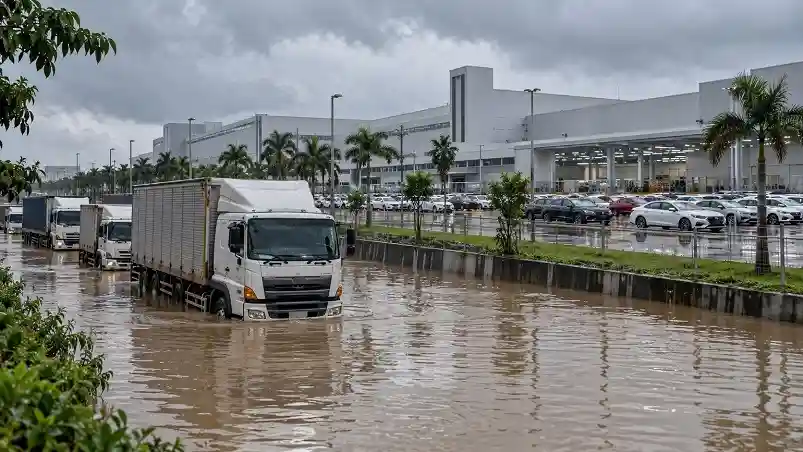
Image Credit: Bangkok Business News
Days of heavy rain have left roads flooded and industrial supply networks under pressure. Beyond the factory gates, this Bangkok Business News report highlights how impassable routes have prevented suppliers from reaching customers and made commuting difficult for employees. Preliminary industry estimates put damage and disruption across the automotive supply chain and related businesses at more than THB1 billion.
Honda Targets October 7 Restart
Honda Automobile (Thailand) Co., Ltd. President and CEO Koji Iwanami said vehicle production at the company’s Prachin Buri and Ayutthaya plants would be suspended from October 2 through October 6. Suppliers affected by flooding, particularly in Chonburi and Rayong, have been unable to deliver components required for assembly.
Honda expects the disruption across its vehicle models to be short-lived and plans to resume normal operations on October 7. After reopening, the company intends to add overtime shifts to recover lost output and fulfill customer orders as scheduled.
The automaker has also allowed employees affected by flooding to take leave. That arrangement gives workers time to protect their families, address property damage and manage their safety while conditions remain difficult.
Toyota Searches for Alternative Routes
Toyota Motor Thailand has suspended operations at its three main assembly plants: Samrong in Samut Prakan, and Ban Pho and Gateway in Chachoengsao. A plant operated by affiliated Toyota Auto Works Co., Ltd. has also stopped production.
Accumulated rainfall exceeding 320 millimeters over three days left major roads heavily flooded, with some routes impassable to smaller vehicles. Parts deliveries consequently fell behind schedule, while some workers struggled to reach their workplaces.
The interruptions have hit Toyota’s just-in-time production system, which relies on components arriving when needed for assembly. When those deliveries fail, shortages can bring production lines to a standstill even when factories themselves remain operational.
Toyota described the stoppage as temporary and said it did not represent a structural reduction in production capacity. The company is assessing conditions with suppliers and preparing alternative transport routes to restart production as soon as possible.
Industrial Damage Spreads Beyond Carmakers
Federation of Thai Industries Chairman Pimjai Leeissaranukul said flooding from September 24 through September 30 affected Bangkok and 14 other provinces. Around 40 percent of federation member businesses in affected areas reported an impact, with industrial areas in Chonburi particularly hard hit.
The federation’s preliminary estimate places losses at no less than THB1.018 billion. Direct damage includes machinery, electrical systems, raw materials, components and vehicles. Indirect losses cover production stoppages, employees being unable to reach workplaces and missed business opportunities.
Recovery Depends on Roads and Drainage The federation said vehicle production could normalize once drainage improves and conditions ease in key industrial and logistics areas. For manufacturers, the immediate priority is restoring dependable deliveries so assembly lines can operate again. Honda’s planned restart and Toyota’s search for alternative routes offer a path toward recovery, but transport conditions remain central to restoring output and meeting customer schedules.