

What To Know
- He also acknowledged that the limited number of approved businesses participating in the program could be a factor.
- He admitted that expectations were higher for the start of the high season but stressed that changes in economic conditions and booking patterns must be closely monitored.
Bangkok Business News: Subsidy Fizzles Despite Strong Initial Registrations
Thailand’s latest domestic tourism stimulus appears to be faltering as economic pressure keeps Thais grounded, even with generous discounts. Launched on July 1, the 1.75-billion-baht scheme offered a 50% subsidy for local travel, aiming to boost the tourism sector by encouraging Thais to book stays across the country. However, just 91,008 bookings have been made out of 500,000 available privileges, despite 1.58 million people registering for the scheme.

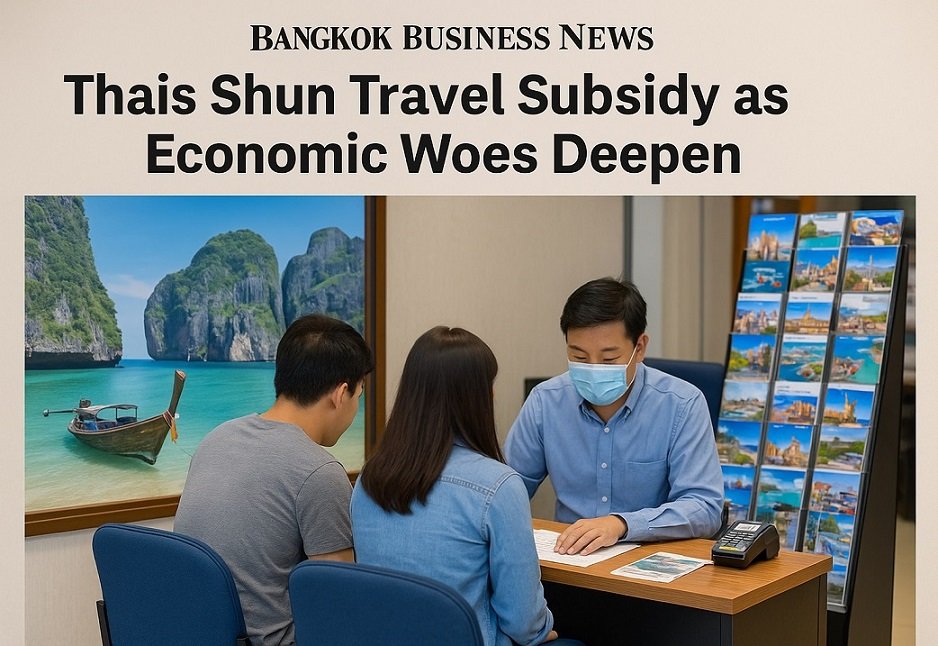
Travel subsidy scheme by government to stimulate domestic tourism fails
Image Credit: Al-Generated
According to Tourism and Sports Minister Sorawong Thienthong, the response has been much weaker than expected. While initial registration numbers gave officials hope, only a fraction of registrants moved forward with actual bookings. This Bangkok Business News report finds that consumer sentiment remains low as Thai households battle high debt and job insecurity, making holidays a low priority in the current financial climate.
Economy and System Glitches Blamed
Minister Sorawong pointed to the sluggish local economy as a key reason behind the hesitancy to travel. Even with half-price hotel stays on offer, many people remain cautious about spending. He also acknowledged that the limited number of approved businesses participating in the program could be a factor. Only 5,254 hotels, restaurants, and attractions have been approved so far, while more than 40,000 operators had applied to join.
Further complicating matters, the Tourism Authority of Thailand (TAT) opened registration for service providers just days before the scheme went live, leaving little time for the vetting process. The ministry defended the delays, citing a need for transparency, but issues were compounded when new participant registration was paused from July 4 to 9 to fix system glitches.
No Immediate Plans to Extend the Program
Despite the slow uptake, Minister Sorawong does not believe the program’s timeframe—set to end in October—needs further extension. “The scheme was already extended once from September. Tourists still have enough time to make bookings,” he said. He admitted that expectations were higher for the start of the high season but stressed that changes in economic conditions and booking patterns must be closely monitored.
There is a possibility of increasing the number of available privileges if the current allocation is eventually redeemed. However, this will depend on how bookings trend through the remainder of July. The government, meanwhile, is focusing its resources on countering the economic impacts of new US tariffs rather than expanding tourism subsidies further.
While the intentions behind the subsidy were well-meaning, the current results reflect a deeper issue—Thai citizens are prioritizing financial survival over leisure. Until real economic recovery takes hold, tourism incentives alone may not be enough to stimulate domestic travel.
For the latest on the Thai economy, keep on logging to Bangkok Business News.