

What To Know
- A new storm is brewing over the Land of Smiles, and this time, it is hitting the wallets of international travelers right as they head for the departure gates.
- On the other side of the aisle, economists insist that a $30 departure fee is a standard global practice and a relatively small price to pay for international travelers.
The Price of Leaving Paradise
A new storm is brewing over the Land of Smiles, and this time, it is hitting the wallets of international travelers right as they head for the departure gates. Government officials are quietly reviewing a controversial proposal to implement an outbound tourist levy—frequently dubbed a departure tax—that could reach up to $30 per person. While policymakers argue the cash injection is vital to shore up widening budget deficits, the travel industry is pushing back with immense force. Online forums, expat groups, and social media platforms are currently melting down over the news.

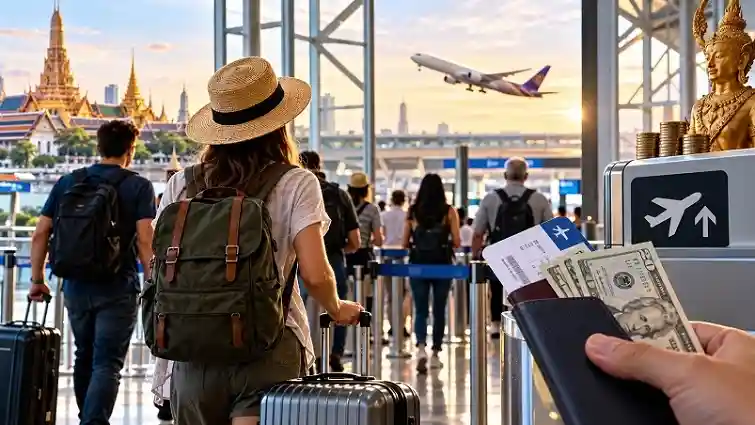
Inage Credit: Bangkok Business News
A High-Stakes Balancing Act
The proposed fee has exposed a massive rift between fiscal planners and the frontline hospitality sector. Proponents of the levy argue that Thailand needs sustainable, long-term revenue streams to modernize its transport networks and offset the rising costs of infrastructure maintenance. However, this Bangkok Business News report highlights that tourism associations are terrified of the potential fallout, warning that even a minor financial friction could derail Thailand’s delicate post-pandemic recovery. Digital nomads, who treat Bangkok and Chiang Mai as their personal offices, are already threatening to pack up their laptops and migrate to cheaper regional competitors like Vietnam or Indonesia.
The Tourism Industry Fights Back
Local hospitality stakeholders argue that the timing of this outbound tax could not be worse. Having spent years recovering from global travel shutdowns, luxury resorts, street food vendors, and boutique operators are finally seeing stable arrival numbers. Travel boards claim that hitting visitors with an unexpected exit bill leaves a bitter final impression, potentially ruining repeat tourism.
Furthermore, critics point out that the logistics of collecting this fee at bustling airports could trigger operational bottlenecks, leading to longer queues and frustrated flyers at a time when airports are already struggling with peak capacity.
Deficits Versus Destination Appeal
On the other side of the aisle, economists insist that a $30 departure fee is a standard global practice and a relatively small price to pay for international travelers. They emphasize that the generated funds could directly improve public safety, upgrade tourist hubs, and create a financial buffer for future economic shocks. Yet, the viral backlash proves that perception is everything in the digital age. For budget-conscious backpackers and remote workers living on tight monthly stipends, an extra fee simply adds to the growing sentiment that traveling through Southeast Asia is becoming increasingly expensive.
Navigating an Uncertain Horizon
As the debate rages across TikTok, X, and LinkedIn, the government faces a precarious tightrope walk. They must carefully weigh the immediate benefits of national debt reduction against the long-term risk of tarnishing Thailand’s reputation as an affordable, world-class destination. If the global outcry intensifies, officials might be forced to scale back the fee or delay its implementation entirely to pacify the international community. For now, the global travel community is watching Bangkok with bated breath, wondering if their next trip to the kingdom will end with an unwelcome parting charge.
A Crossroads for Thai Hospitality
The final resolution of this tax debate will undoubtedly shape the future trajectory of Thai tourism for years to come. Policymakers must find a delicate middle ground that preserves national financial health without alienating the millions of loyal visitors who keep the local economy alive. Striking this balance is crucial, or Thailand risks watching its hard-earned holiday traffic slip away to savvier regional neighbors.