

What To Know
- Thailand’s economy is caught in a perilous cycle of mounting debt across households, businesses, and the state, the National Economic and Social Development Council (NESDC) has warned.
- At its 2025 annual seminar on September 11, NESDC officials laid bare how runaway liabilities are undermining growth, dragging the country into what economists are calling a “diabolic loop.
Bangkok Business News: Thailand’s Debt Builds a “Diabolic Loop”
Thailand’s economy is caught in a perilous cycle of mounting debt across households, businesses, and the state, the National Economic and Social Development Council (NESDC) has warned. At its 2025 annual seminar on September 11, NESDC officials laid bare how runaway liabilities are undermining growth, dragging the country into what economists are calling a “diabolic loop.” This Bangkok Business News report finds that unless the cycle is broken, the cost will be borne not just by financial institutions but by every level of society.

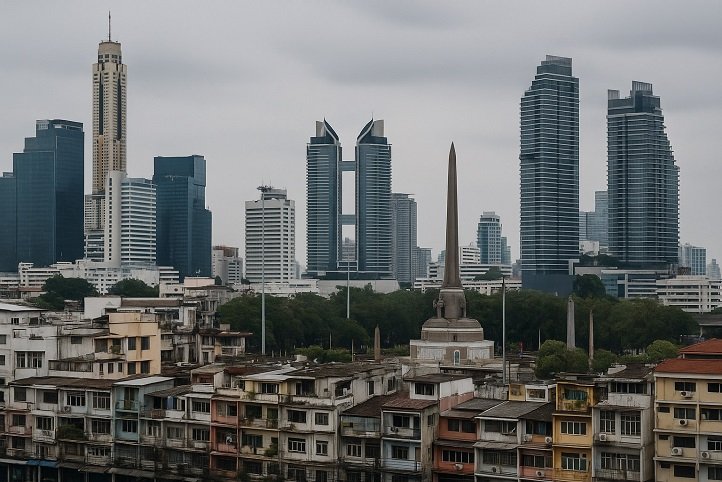
Thailand faces rising household and business debt threatening long term economic growth
Image Credit: AI-Generated
NESDC officials emphasized that while debt and economic output are intertwined, current debt levels are compressing Thailand’s growth potential. Household non-performing loans (NPLs), once manageable, are now rising sharply, especially among the most vulnerable. Corporate “special mention” debts have also swelled, with pandemic hangovers, global trade pressures, and slowing domestic activity combining to erode repayment capacity. Public debt, meanwhile, is nearing the 70% of GDP threshold—beyond which the IMF has cautioned that room for fiscal manoeuvre all but vanishes.
Hard Realities for SMEs and Public Debt
A key concern is that smaller businesses, especially super-micro firms, are bearing the brunt of the deteriorating credit environment. Large firms currently command around 90% of business lending by value from financial institutions; businesses with credit lines under 500 million baht get less than 10%.
In contrast, over 60% of new NPLs originate from super-micro SMEs. These enterprises are facing default across sectors—manufacturing, construction, transportation, retail, food and accommodation, and real estate. Construction in particular remains stalled, with weak recovery in others signalling the broader economic slowdown that has worsened since 2024.
What Can Be Done to Break the Cycle
NESDC suggests the government must avoid piling on more debt, even to stimulate growth. Instead, efforts should focus on:
-Boosting domestic consumption and promoting locally made products to lessen import dependency.
-Expanding exports by easing costs and helping industries affected by tariffs.
-Supporting SMEs through more tailored credit solutions, better information, and guarantee mechanisms to reduce lenders’ risks.
Other proposals include improving financial data infrastructure, forming a stronger national credit guarantee agency, and getting larger companies to help smaller ones through supply-chain integration and knowledge sharing.
Where Thailand Stands and What’s Ahead
Thailand is at a crossroads. Debt has reached levels that are restraining growth, resource allocation, and the capacity of the state to respond to economic shocks. The “diabolic loop” describes exactly how rising NPLs and debt force borrowing, which then further slows GDP—forcing yet more borrowing. Without decisive, targeted action, the burden could tip into crisis, especially for vulnerable households and smaller businesses that lack buffers. Policy shifts aimed at structural reforms, fiscal discipline, and protections for SMEs are urgent.
To reverse the current downward spiral, the government must commit to long-term strategies rather than quick fixes. Effective implementation of revenue collection, budget efficiency, and targeted support are essential to restoring stability and preventing economic stagnation.
For the latest on the Thai economy, keep on logging to Bangkok Business News.