

What To Know
- A significant portion of its crude oil supply originates from the Middle East, making the country highly sensitive to geopolitical instability in the region.
- At the same time, global economic bodies have warned that countries heavily reliant on imported energy are particularly vulnerable to prolonged geopolitical disruptions, placing Thailand in a challenging position.
Bangkok Business News: Energy Crisis Ripples Toward Bangkok’s Economy
Thailand is bracing for mounting economic pressure as global fuel prices surge sharply amid the escalating conflict involving Israel, Iran, and the United States. The ongoing tensions have disrupted key oil supply routes, particularly around the Strait of Hormuz, one of the world’s most critical energy corridors. As a result, global oil prices have spiked rapidly, sending shockwaves across energy-dependent economies.

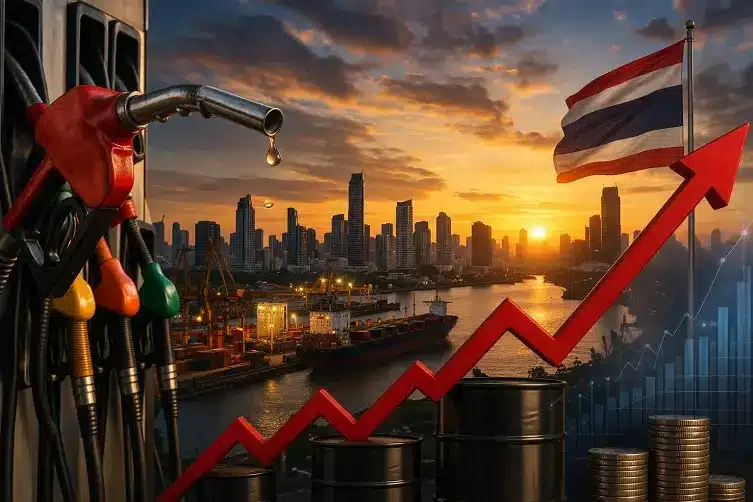
Image Credit: Bangkok Business News
As an oil-importing nation, Thailand finds itself especially exposed. A significant portion of its crude oil supply originates from the Middle East, making the country highly sensitive to geopolitical instability in the region. Any prolonged disruption translates almost immediately into higher domestic fuel costs, which in turn ripple across the broader economy.
Rising Costs Threaten Businesses and Consumers
The impact is already becoming visible across several sectors. Transport, logistics, manufacturing, and agriculture are facing escalating operational costs, forcing businesses to rethink pricing strategies. This Bangkok Business News report highlights how companies are struggling to balance rising expenses while keeping goods affordable for consumers.
Fuel plays a central role in Thailand’s economic ecosystem. As prices climb, transportation costs increase, supply chains become more expensive to maintain, and production costs rise across industries. Inevitably, these pressures are passed on to consumers, resulting in higher prices for essential goods such as food, household items, and daily necessities.
With oil prices crossing significant thresholds globally, concerns are growing that further escalation in the conflict could push prices even higher in the coming weeks.
Inflation Risks and Slowing Growth
Economists are increasingly warning that sustained high fuel prices could weaken Thailand’s economic momentum. Inflationary pressures are expected to rise as businesses pass on increased costs, while overall economic growth could slow due to reduced consumer spending and tighter business margins.
Industries that rely heavily on energy inputs, including petrochemicals, plastics, and transportation, are among the most vulnerable. Meanwhile, the agricultural sector may also feel the strain, particularly as input costs such as fertilizers and fuel for machinery increase.
Beyond Thailand, the broader Asian region is also beginning to experience similar disruptions, highlighting how interconnected global energy markets have become. Any instability in one region can quickly cascade across multiple economies.
Government Measures and Growing Uncertainty
In response to the unfolding crisis, Thai authorities have begun implementing precautionary measures, including efforts to secure energy supplies and stabilize domestic fuel availability. However, these actions may offer only short-term relief if global oil prices remain elevated.
There are also growing concerns about the sustainability of government fuel subsidies. While subsidies can help cushion the immediate impact on consumers, they place a heavy burden on public finances. If such support is reduced or withdrawn, households and businesses could face even steeper cost increases.
At the same time, global economic bodies have warned that countries heavily reliant on imported energy are particularly vulnerable to prolonged geopolitical disruptions, placing Thailand in a challenging position.
A Mounting Economic Challenge Ahead
Thailand now faces a critical period as it navigates one of the most intense energy shocks in recent years. The country’s dependence on imported fuel leaves it highly susceptible to external factors beyond its control, making economic stability harder to maintain during times of global conflict.
If the situation continues, the cumulative impact could extend far beyond rising prices. Economic growth may slow, business confidence could weaken, and consumers may begin to cut back on spending as living costs rise. This combination of factors has the potential to reshape Thailand’s economic landscape in the months ahead.
As uncertainty looms, adaptability will be key. Policymakers, businesses, and consumers must all respond strategically to manage risks and sustain economic resilience in an increasingly volatile environment. The road ahead may be challenging, but how Thailand responds now will determine how well it weathers this global storm.
For the latest on the Thai economy, keep on logging to Bangkok Business News.