


What To Know
- A further 18 percent is tied to infrastructure maintenance, while agriculture—seen as a crucial pillar—receives only about 10 percent.
- He emphasized the need for a “D-A-R-E to Reform” approach, which stands for determination, action, redesign, and emergency readiness.
Bangkok Business News: NESDC Raises Alarm Over Spending Priorities
Thailand’s National Economic and Social Development Council (NESDC) has sounded a serious warning, declaring that national development progress has stalled despite the government spending over 3.37 trillion baht on the 13th National Development Plan across the last three years. According to Secretary-General Danucha Pichayanan, misaligned budget priorities have severely weakened momentum. This Bangkok Business News report highlights that more than half of annual allocations—over 1 trillion baht each year—have been absorbed by social welfare and routine expenditures, leaving little for long-term investments.
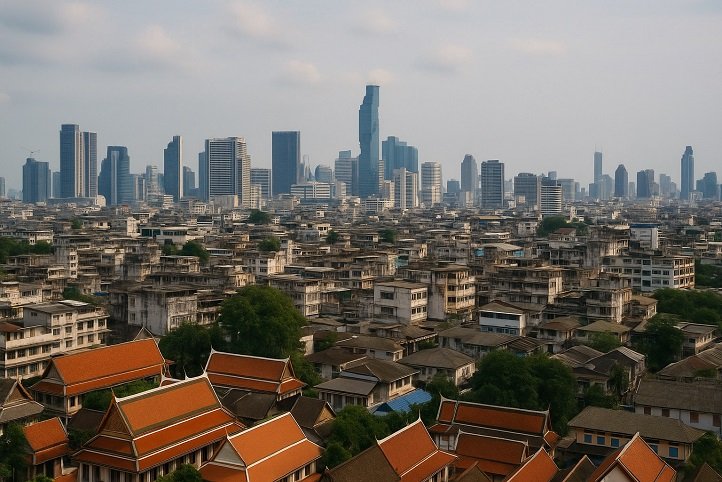
Thailand faces stalled growth despite trillions spent on its development plan
Image Credit: AI-Generated
Misaligned Spending and Weak Growth
Of the national budget, 50 percent is funneled into universal healthcare, education, and other routine services. A further 18 percent is tied to infrastructure maintenance, while agriculture—seen as a crucial pillar—receives only about 10 percent. Danucha criticized this focus on short-term supply-side activities, noting the lack of forward-looking investments in technology, productivity, and higher-value industries such as healthcare. Without a shift in strategy, Thailand risks deepening its middle-income trap.
Key Targets in Jeopardy
Several critical 2027 national goals now appear out of reach. The target GDP per capita of 300,000 baht is projected to fall short at around 267,661 baht. The Human Achievement Index has slipped to 0.6354, signaling a downgrade from a high level to medium. Inequality remains problematic, with the richest earning 5.22 times more than the poorest, above the planned reduction threshold. Meanwhile, greenhouse gas emissions have risen by 1 percent year-on-year, moving further away from the target of cuts.
Call for Structural Reform
NESDC has linked these failures to systemic weaknesses in competitiveness, regulatory frameworks, and public sector inefficiency. To reverse the decline, Danucha called for sweeping reforms in five areas: laws and regulations, corruption, the rule of law, democracy, and public sector management. He emphasized the need for a “D-A-R-E to Reform” approach, which stands for determination, action, redesign, and emergency readiness. Without urgent change, Thailand risks stagnation and falling further behind regional peers.
Thailand’s economic challenges now require more than incremental policy tweaks. The NESDC insists only bold reforms can steer the country away from the middle-income trap and back toward sustainable growth.
For the latest on the Thai economy, keep on logging to Bangkok Business News.