


What To Know
- The measures include offering extended tax exemptions of up to five years for companies upgrading their machinery, providing an additional two-year 50 percent tax reduction for firms sourcing materials locally, and tightening incentives for low-value or oversupplied industries.
- Leading Thai banks are warning that a potential 36 percent US tariff could devastate the nation’s export revenue, disrupt supply chains, and result in massive job losses.
Bangkok Business News: Threatened as US Tariffs Loom
Thailand’s export-driven economy is heading into turbulent times as looming US tariffs threaten to undermine domestic growth, investment confidence, and job stability. The government and private sector are bracing for impact as analysts warn that the global trade war could hit Thailand harder than expected. To cushion the blow, the Board of Investment (BOI) has rolled out a five-point strategy to help local industries withstand external shocks.
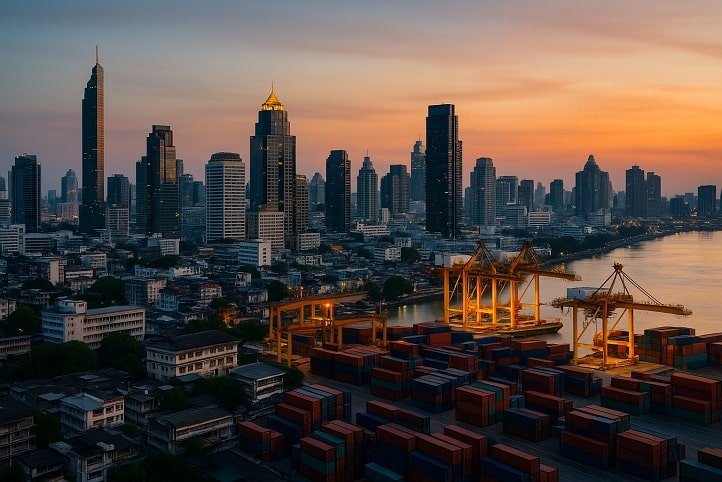
Thailand faces mounting pressure as export setbacks threaten to derail domestic economic stability.
Image Credit: AI-Generated
In fact, this Bangkok Business News report highlights growing concern among economists that delayed responses or half-hearted measures could push the Thai economy toward recession. Despite optimistic government forecasts, businesses are already showing signs of anxiety, and consumer sentiment remains fragile.
BOI Unveils Bold Countermeasures
The BOI’s newly announced plan focuses on revitalizing Thailand’s manufacturing and industrial base. The measures include offering extended tax exemptions of up to five years for companies upgrading their machinery, providing an additional two-year 50 percent tax reduction for firms sourcing materials locally, and tightening incentives for low-value or oversupplied industries. The plan also enforces stricter local employment and ownership conditions to ensure that the benefits of foreign investment are distributed more equitably across Thai enterprises.
Officials say these steps are designed to move Thailand toward a more self-sufficient, high-value economy that relies less on external demand. However, business leaders caution that such transformations take time, and the window to act before major tariff effects hit may be short.
Financial Sector Sounds Alarm
Leading Thai banks are warning that a potential 36 percent US tariff could devastate the nation’s export revenue, disrupt supply chains, and result in massive job losses. Industry experts estimate the potential financial damage could exceed 1.2 trillion baht, with the auto parts and electronics sectors being among the hardest hit. Smaller suppliers and subcontractors, particularly in industrial zones across the Eastern Economic Corridor, may face bankruptcy if export orders plunge sharply.
Financial analysts note that two consecutive quarters of negative growth would officially signal a recession, and such a downturn could trigger a wider confidence crisis among investors. The Thai baht, already under pressure, could see renewed volatility as foreign investors seek safer havens in other Asian markets.
Trade Diplomacy and Domestic Tensions
To mitigate the risks, Thailand is accelerating trade negotiations with the United States and other key partners. However, talks are complicated by disagreements over agricultural imports, with American negotiators pressing for zero tariffs on meat products — a demand that Thai farmers and food producers strongly oppose. The standoff underscores the delicate balance Bangkok must maintain between global trade obligations and domestic political realities.
Meanwhile, political uncertainty and slow bureaucratic procedures continue to frustrate investors and manufacturers, adding another layer of risk to the already fragile business environment.
The Road Ahead for Thailand’s Economy
Thailand is now at a crossroads. Years of relying on exports as the backbone of its economy have left it vulnerable to global disruptions. Policymakers are urging diversification and digital transformation to build resilience, but these efforts require strong coordination between government agencies, the private sector, and labor groups.
If the BOI’s strategy is implemented swiftly and effectively, Thailand may yet turn this challenge into an opportunity to modernize its economy. But if complacency sets in and external shocks intensify, the country risks sliding into a prolonged period of stagnation and instability. The next twelve months will be crucial in determining whether Thailand can weather the storm or be swept away by it.
For the latest on the Thai economy, keep on logging to Bangkok Business News



