

What To Know
- Thailand’s aviation sector is facing one of its most challenging periods in recent years as soaring aviation fuel prices linked to the prolonged Middle East conflict force airlines to cancel thousands of flights, cut route frequencies and suspend services across key domestic and international markets.
- From a peak approaching 10,000 disrupted flights in May, the figure is expected to fall to around 2,000 flights, suggesting that the industry may be moving toward a more stable operating environment.
Bangkok Business News: Thailand’s aviation sector is facing one of its most challenging periods in recent years as soaring aviation fuel prices linked to the prolonged Middle East conflict force airlines to cancel thousands of flights, cut route frequencies and suspend services across key domestic and international markets.

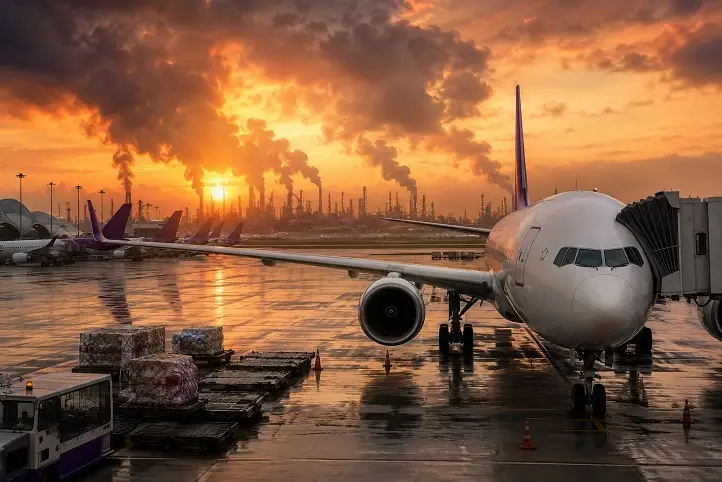
Image Credit: Bangkok Business News
The crisis has already resulted in the cancellation or reduction of approximately 3,840 flights, wiping out more than 1.2 million passenger seats during the first half of the year. Industry regulators say the unprecedented surge in Jet A-1 fuel costs has dramatically altered airline economics, placing intense pressure on carriers struggling to balance rising expenses with weakening demand during the traditional low travel season. In the midst of mounting uncertainty, this Bangkok Business News report finds that airlines are increasingly reshaping their networks to protect profitability while preparing for an eventual market rebound.
Fuel Shock Sends Costs Soaring
According to the Civil Aviation Authority of Thailand (CAAT), the prolonged instability in the Middle East has driven Jet A-1 aviation fuel prices to levels two to three times higher than historical norms. Fuel that once represented roughly 30 percent of airline operating expenses now accounts for more than half of total costs for many carriers.
The impact on airline finances has been severe. Jet fuel prices, which previously hovered around US$80 per barrel, have reportedly surged beyond US$240 per barrel, dramatically increasing the cost of operating every flight. Airlines have had little choice but to revise schedules, reduce frequencies and adjust fares in an effort to absorb the financial shock.
Passengers have already felt the effects. On some routes, including the popular Bangkok–Chiang Mai corridor, average ticket prices have climbed by about 45 percent as carriers pass a portion of the increased fuel burden onto travelers.
Thousands of Flights Removed from Schedules
The response from Thai airlines has been extensive. Thai Airways has suspended or reduced services on ten routes, affecting destinations including New Delhi, Kaohsiung, Hong Kong, Sapporo and Changsha. Some cancellations extend through September, highlighting the depth of concern surrounding operating costs and seasonal demand.
Thai Lion Air has implemented one of the broadest network reductions, suspending or scaling back numerous services linking Bangkok with destinations in China, India, Nepal, Indonesia and Singapore. Several routes have been halted entirely for months, while others have seen significant reductions in daily frequencies.
Thai AirAsia has also introduced widespread suspensions affecting both domestic and international routes. Services connecting Suvarnabhumi Airport with major provincial destinations such as Chiang Rai, Khon Kaen, Hat Yai, Krabi and Surat Thani have been temporarily halted. International services to destinations including Bali, Hong Kong, Singapore, Kathmandu and several Indian cities have also been affected.
Signs of Stabilization Emerging
Despite the disruption, aviation authorities believe conditions may gradually improve over the coming months. Industry experts said the number of cancellation requests being submitted by airlines has started to decline.
From a peak approaching 10,000 disrupted flights in May, the figure is expected to fall to around 2,000 flights, suggesting that the industry may be moving toward a more stable operating environment.
If geopolitical tensions do not escalate further during July and August, regulators expect the aviation sector to enter the high-season period beginning in October with stronger momentum. Increased travel demand and renewed competition among airlines could eventually help moderate ticket prices and restore capacity across suspended routes.
Consumer Protection Remains a Priority
CAAT has also urged passengers to purchase tickets directly through airline websites and mobile applications. Officials warn that overseas ticket agencies may add significant mark-ups that fall outside the jurisdiction of Thai consumer protection laws.
While airlines continue to trim schedules, operators insist that sufficient capacity remains available on major routes. Carriers have indicated they are prepared to rapidly restore flights once fuel costs ease and passenger demand strengthens.
The aviation industry’s current difficulties underscore how deeply global geopolitical events can affect Thailand’s economy and tourism sector. Although airlines have demonstrated resilience by adjusting operations and preserving core services, the coming months will be critical. A sustained easing of fuel prices and stronger travel demand could help restore confidence, rebuild lost capacity and return the sector to growth. Until then, airlines, regulators and passengers alike will continue navigating one of the most expensive operating environments the industry has faced in years.
For the latest on the Thai economy, keep on logging to Bangkok Business News.