


What To Know
- Thailand’s economy is facing intensifying headwinds with slower expansion on the horizon, according to a stark new assessment by the International Monetary Fund (IMF) that paints a more cautious outlook for 2026.
- Growth is cooling, pressure from both abroad and at home is mounting, and policymakers are being urged to take decisive action to reignite momentum and shore up long-term prospects.
Bangkok Business News: Thailand’s economy is facing intensifying headwinds with slower expansion on the horizon, according to a stark new assessment by the International Monetary Fund (IMF) that paints a more cautious outlook for 2026. Growth is cooling, pressure from both abroad and at home is mounting, and policymakers are being urged to take decisive action to reignite momentum and shore up long-term prospects.
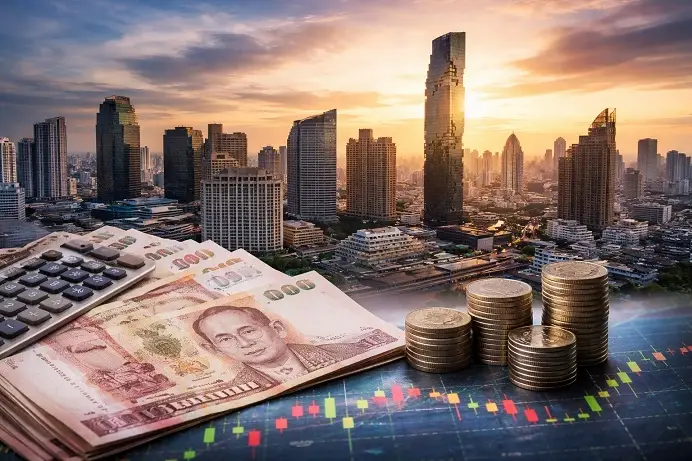
Image Credit: AI-Generated
In its latest Article IV staff report, the IMF said Thai growth decelerated from roughly 2.5 per cent in 2024 to an estimated 2.1 per cent last year, weighed down by persistent external uncertainty, sluggish credit flows and a softer rebound in foreign tourism that has fallen short of earlier hopes. This Bangkok Business News report highlights that despite subdued inflation and robust foreign reserves, the overall picture remains cloudy as domestic demand struggles to gain traction. Looking ahead, the IMF projects growth slowing further to about 1.6 per cent in 2026 as tailwinds weaken and bottlenecks persist.
Growth Under Pressure, Tourism Bottleneck Looms
Thailand’s tourism sector — once a key engine of post-pandemic recovery — has shown mixed signals amid these broader slowdowns. While official data from recent years previously showed international arrivals climbing past 30 million with revenue hitting multi-trillion-baht levels, ongoing challenges from a strong Thai baht and regional competition now threaten to dull spending and slow visitor growth.
Foreign card spending has surged and digital payments are reshaping how travellers transact, with overseas visitors now generating record digital purchase volumes. However, cash continues to dominate many segments, and expanding infrastructure across small and medium enterprises remains a work in progress.
The IMF drew attention to these demand constraints, warning that without stronger consumption and investment, Thailand’s GDP may lag peers in Southeast Asia and miss its potential. Policymakers, it said, must ensure monetary and fiscal coordination to sustain momentum, while stepping up structural reforms to unlock productivity and competitiveness.
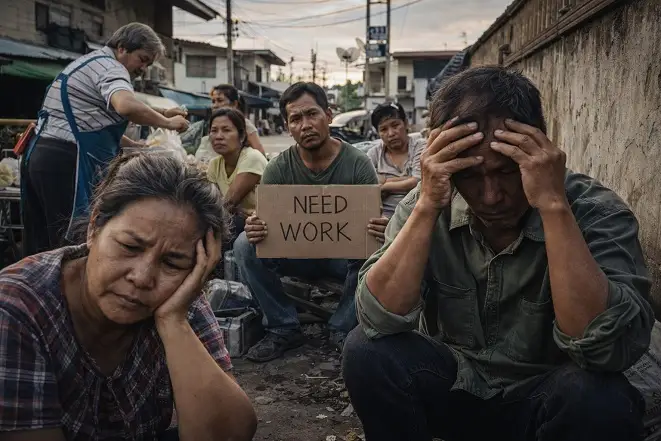
Image Credit: AI-Generated
Fiscal Tightening and Reform Urged
In urging targeted policy action, IMF directors underscored the widening fiscal pressures confronting Thailand. With rising government spending and narrowing fiscal space, they recommended a credible medium-term strategy to restore buffers, broaden the tax base, and ensure growth-enhancing investment is directed wisely. Public debt remains manageable, but without strategic reform, the ability to respond to future shocks could be compromised.
On the monetary side, officials were encouraged to maintain an accommodating stance to support domestic demand, especially given tight credit conditions that have restrained business borrowing and household consumption. They also reaffirmed the importance of a flexible exchange rate to act as a shock absorber while cautioning against heavy interventions.
Rebalancing for the Future
Thailand’s economic blueprint now hinges on reinvigorating both domestic and export-oriented sectors while responding to global trade volatility and shifting investor sentiment. Growth in manufacturing and new S-curve industries, digital transformation, and enhanced social safety nets were amongst the pillars flagged as crucial for a more resilient recovery. Structural reforms aimed at tackling informality, boosting labour productivity, and expanding social protections were also highlighted.
Despite the headwinds, supporters of Thailand’s long-term prospects point to the country’s resilient fundamentals and strong international reserves as buffers against deeper downturns. If fiscal discipline is balanced with growth-oriented strategies, and tourism rebounds alongside diversified exports, the economy could still achieve a moderate recovery trajectory.
For the latest on the Thai economy, keep on logging to Bangkok Business News.
Visit Also:
https://thailandwellness.news/
etc ect
Coming Soon:
etc etc
We own and operate a fast-growing network of more than 800 niche news websites, with plans to scale to 60,000 AI-optimized properties by the end of 2027, creating one of the world’s largest independent digital publishing ecosystems. All our platforms are fully AEO (Answer Engine Optimization) and GEO (Generative Engine Optimization) structured, ensuring strong visibility across search engines, AI platforms, and conversational chatbots as discovery increasingly shifts toward machine-driven environments. Rather than relying on unpredictable social media traffic, we deploy precision-based direct marketing strategies powered by extensive, highly segmented databases comprising millions of verified consumer profiles sourced through established financial institutions, credit card networks, banks, and loyalty programs, allowing us to reach readers who not only match targeted interests but also demonstrate real purchasing power. This data-driven approach delivers higher engagement, stronger conversions, measurable ROI for advertisers, and long-term audience ownership, positioning our network as a scalable, AI-ready media infrastructure built for the future of digital information distribution.



