


What To Know
- In the heart of this International Business News report lies the story of a transformation that could see Singapore evolve from a regional player into a global investment magnet.
- Morgan Stanley also highlights structural threats including global trade tensions, a stall in equity reforms, and the risk of Singapore losing out to markets like Hong Kong, Tokyo, or the UAE.
International Business News: Singapore Equities Surge to New Heights
Singapore’s stock market is drawing global attention as it blazes through new record highs, with experts declaring the start of a powerful bull run that could reshape investor strategies across Asia. The benchmark Straits Times Index (STI) has risen more than 23% since April 9, according to LSEG data, outperforming the S&P 500 and many regional peers. Analysts from major financial institutions like Maybank and Aberdeen believe this is only the beginning of what they call a “baby bull” market—still in its early stages but poised for major expansion.
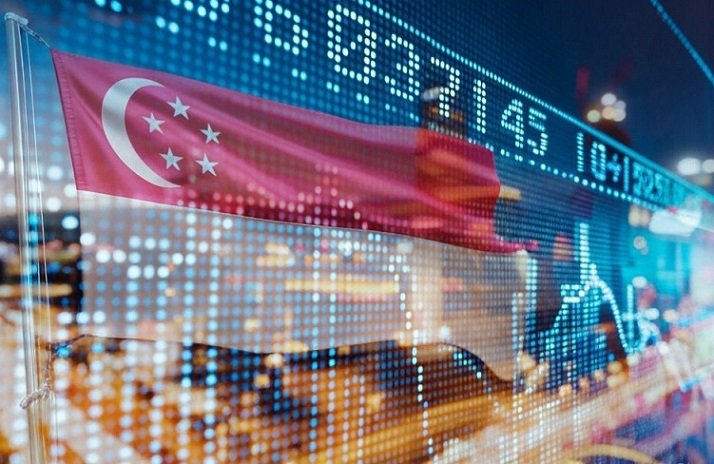
Singapore’s stock market is capturing global spotlight as it surges to unprecedented record levels
Image Credit: AI-Generated(GROK)
Once labeled as a low-growth, dividend-yielding market suited for conservative investors, Singapore is now making waves thanks to a potent mix of factors. These include strong macroeconomic indicators, equity market reforms, foreign capital inflows, rising dividends, and increasing investor confidence in Singapore as a geopolitical and financial safe haven. In the heart of this International Business News report lies the story of a transformation that could see Singapore evolve from a regional player into a global investment magnet.
Safe Haven Status and Rising Dividends Fuel Confidence
Singapore’s appeal is reinforced by its resilient currency, significant fiscal reserves, and high shareholder returns. According to Aberdeen’s Xin-Yao Ng, dividend yields in Singapore are among the highest in the Asia-Pacific region—second only to Australia. Research from CLSA pegs the average payout ratio at 60%, making Singapore equities especially attractive to income-focused investors.
Currency strength also plays a vital role. The Singapore dollar has appreciated nearly 6% against the US dollar in 2025 alone, with Jefferies forecasting it could reach parity with the greenback within five years. For foreign investors, this means amplified returns when converting gains back into their home currencies.
Macroeconomic data also supports investor enthusiasm. GDP grew 4.3% in Q2, up from 4.1% in Q1, signaling robust demand and service sector strength. Key performers in the rally include Singtel, up 28% year-to-date, while Sembcorp Industries and Union Gas Holdings have soared by 38% and 18% respectively.
Institutional Interest and Government Support Driving Momentum
Experts like Maybank’s Thilan Wickramasinghe believe institutional investors are just beginning to rotate into real estate investment trusts (REITs) and consumer stocks, hinting at even more upside. A construction boom not seen in over a decade is underway, with forecasted demand between SGD 35 billion and SGD 39 billion in 2025—well above pre-COVID levels.
The Monetary Authority of Singapore is also injecting fuel into the rally through its Equity Market Development Program (EMDP), allocating SGD 1.1 billion of a planned SGD 5 billion to stimulate liquidity in small and mid-cap stocks. Fund managers involved in the program must co-invest and actively trade, further boosting market participation.
Optimism Tempered by Risk Warnings
While JPMorgan and Morgan Stanley foresee the STI reaching 4,500 or even 5,000, and expect a valuation re-rating that could see the MSCI Singapore index double within five years, not everyone is convinced. Citibank warns of a potential “liquidity trap” as retail investors flood into small-cap stocks, risking major losses if the momentum slows.
Morgan Stanley also highlights structural threats including global trade tensions, a stall in equity reforms, and the risk of Singapore losing out to markets like Hong Kong, Tokyo, or the UAE.
Still, with reform-driven tailwinds, AI-fueled productivity, and strong fundamentals, Singapore’s equity market seems ready to redefine its role in global finance.
For the latest International Business News, keep on logging to Bangkok Business News.