


What To Know
- As costs continue to rise across the supply chain, pork prices at retail markets may soon follow, adding to the broader cost-of-living challenges faced by households.
- Ensuring stability in the sector will require careful coordination between producers, distributors, and policymakers, especially as global uncertainties remain unresolved and continue to influence domestic markets in unpredictable ways.
Bangkok Business News: Rising Costs Drive Fresh Price Adjustment
Thailand’s pork industry is entering another period of price pressure as production costs continue to climb. Starting March 30, three major swine organizations have recommended increasing the farm-gate price of live pigs by THB2 per kilogram. The move reflects ongoing financial strain across the sector, where farmers are struggling to cope with rising operational expenses.
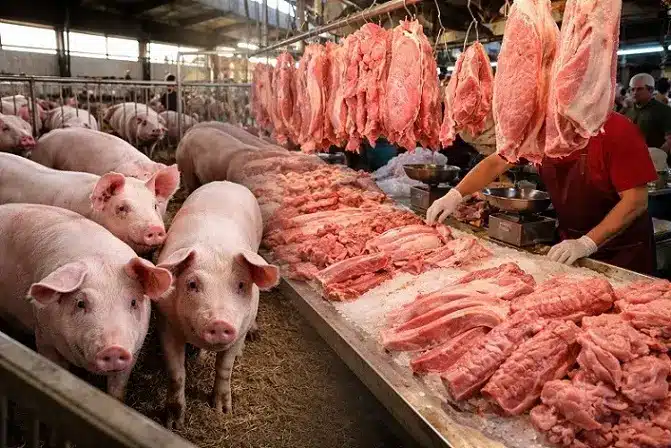
Image Credit: Bangkok Business News
Energy and Transport Costs Take Center Stage
The decision comes as oil prices continue to fluctuate, directly impacting transport and energy costs—two of the most critical components of pig farming. These expenses have risen steadily in recent months, making it increasingly difficult for farmers to maintain profitability. This Bangkok Business News report underscores how fuel-linked costs are now shaping pricing decisions across Thailand’s livestock industry. As logistics and electricity costs climb, farmers are left with little choice but to adjust prices upward to stay afloat.
New Recommended Price Levels Announced
Under the updated guidance, the Southern Swine Raisers Association has set the recommended farm-gate price for fattening pigs at THB72 per kilogram. Pig sides are now priced at THB84 per kilogram, while culled breeding sows stand at THB40 per kilogram. Meanwhile, 16-kilogram piglets are valued at around THB2,200, with a possible variation of plus or minus THB72 depending on market conditions. The Chon Buri Swine Raisers Co-operative Ltd and the Northeastern Swine Raisers Association have adopted the same THB2 per kilogram increase, ensuring consistency across regions.
Market Forces Still Determine Final Prices
Despite the revised recommendations, industry leaders stress that these are not fixed prices. Actual transactions will still depend on negotiations between buyers and sellers, as well as prevailing supply and demand conditions. This flexibility allows the market to respond dynamically, but it also introduces uncertainty for both producers and consumers.
Weather and Global Inputs Add More Pressure
Beyond oil-related costs, farmers are also facing higher feed prices due to global raw material trends. In addition, erratic weather conditions have disrupted farming cycles, reducing efficiency and increasing the need for additional resources. These combined pressures are making pig farming more complex and costly than ever before.
Balancing Farmer Survival and Consumer Impact
The latest price adjustment highlights the delicate balance between protecting farmers’ livelihoods and managing consumer affordability. As costs continue to rise across the supply chain, pork prices at retail markets may soon follow, adding to the broader cost-of-living challenges faced by households. Ensuring stability in the sector will require careful coordination between producers, distributors, and policymakers, especially as global uncertainties remain unresolved and continue to influence domestic markets in unpredictable ways.
For the latest on the Thai economy, keep on logging to Bangkok Business News.



