

What To Know
- Thailand’s restaurant industry is entering one of its most challenging periods in recent years as rising operating costs, slowing consumer spending and relentless price competition place increasing pressure on businesses across the sector.
- In the middle of a market where consumers are becoming more cautious with their spending, this Bangkok Business News report finds that restaurant operators are being forced to rethink business models, improve efficiency and search for new ways to remain profitable without sacrificing quality or customer experience.
Bangkok Business News: Thailand’s restaurant industry is entering one of its most challenging periods in recent years as rising operating costs, slowing consumer spending and relentless price competition place increasing pressure on businesses across the sector. From major listed restaurant groups to independent operators, many are finding it harder to protect profitability despite continued customer demand and strong brand recognition.

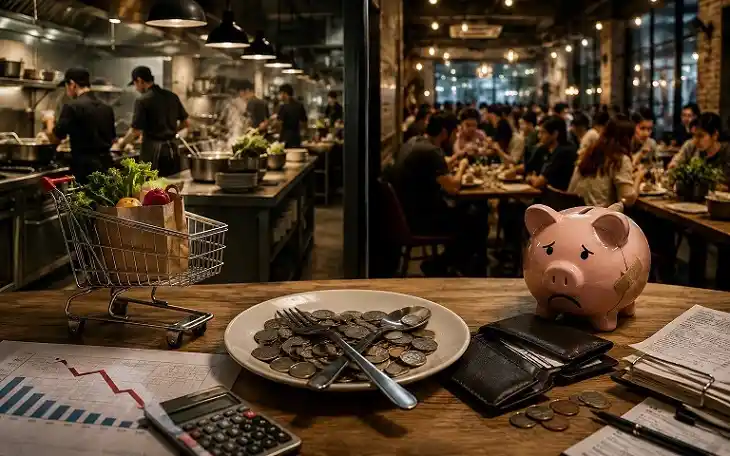
Image Credit: Bangkok Business News
The latest first-quarter financial results paint a worrying picture for much of the industry. Several leading restaurant companies reported sharp declines in earnings as costs climbed and competition intensified. In the middle of a market where consumers are becoming more cautious with their spending, this Bangkok Business News report finds that restaurant operators are being forced to rethink business models, improve efficiency and search for new ways to remain profitable without sacrificing quality or customer experience.
Among the major restaurant groups, earnings weakened significantly. MK Restaurant Group reported net profit of 163 million baht, a decline of more than 31% from the same period last year. S&P Syndicate also recorded lower profits, while dessert chain After You saw earnings fall by 17.5%. Suki Teenoi experienced one of the steepest declines among large operators, with profits dropping by more than one-third. Meanwhile, Ohkajhu operator Pluk Phak Praw Rak Mae slipped deeper into losses. Two of the few bright spots came from Central Restaurants Group, which managed to post a substantial increase in profitability through tighter operational management and stronger efficiency controls and also Minor Foods which is still expanding.
Costs Continue to Climb
Restaurant operators are confronting multiple layers of cost pressure simultaneously. Labour expenses remain elevated, rental costs continue to weigh heavily on businesses, and utility bills have shown little sign of easing. At the same time, delivery platform fees, marketing expenses and customer retention costs have become increasingly significant burdens.
The situation has been further complicated by uncertainty in global energy markets. Rising oil prices have affected transportation expenses, food packaging costs and the prices of several ingredients. Many operators are now seeking alternative suppliers, managing inventory more carefully and reducing food waste in an effort to protect margins.
Industry observers note that hidden costs are becoming just as important as direct operating expenses. Promotions, discount campaigns and loyalty incentives may help attract customers, but they can also erode profits if not managed carefully. As a result, many restaurant groups are focusing less on aggressive expansion and more on improving productivity and supply-chain efficiency.
Consumers Demand Greater Value
A major shift in consumer behaviour is also reshaping the competitive landscape. While people continue to dine out, they are becoming more selective about where and how often they spend their money.
Consumers increasingly expect restaurants to deliver a combination of quality, affordability and memorable experiences. Many households are reducing the frequency of restaurant visits and carefully comparing options before making spending decisions.
This changing behaviour has intensified competition across all segments of the market. Restaurants are no longer competing solely on food quality. Brand strength, loyalty programmes, digital engagement, convenience and menu innovation are becoming critical factors in attracting and retaining customers.
Businesses that can successfully combine value-for-money offerings with efficient operations are emerging as the strongest performers. Operators are also expanding into delivery services, retail food products and new store formats to diversify revenue streams and reduce dependence on traditional dine-in traffic.
Price Wars Hit Smaller Operators Hardest
Perhaps the most damaging trend in the industry has been the prolonged price war, particularly within the self-cooking restaurant segment that includes hotpot, barbecue and grill concepts.
Over the past two years, aggressive competition has intensified as new market leaders entered the sector. While larger operators possess greater financial resources to withstand prolonged discounting, many small and medium-sized businesses have struggled to survive.
The result has been a steady stream of market exits as weaker players find it increasingly difficult to compete on price while maintaining profitability. Restaurants located outside major shopping centres have been particularly vulnerable as customer traffic becomes more fragmented.
Despite the challenging environment, some established operators have resisted joining the race to the bottom. Instead, they are focusing on maintaining brand positioning, service quality and long-term customer loyalty rather than chasing short-term sales through deep discounting.
Industry veterans describe the current environment as another difficult cycle in a business that has historically experienced repeated waves of disruption, ranging from economic downturns and foreign competition to changing consumer trends and new dining formats.
Expansion Continues Despite Uncertainty
Interestingly, many operators are continuing to invest despite the difficult market conditions. Some restaurant groups remain confident that long-term demand for dining experiences will support future growth.
Bar B Q Plaza, for example, plans to expand its branch network further this year, committing substantial investment capital despite softer consumer spending and ongoing economic uncertainty. The strategy reflects confidence that strong brands with loyal customer bases can continue to gain market share even during difficult periods.
However, expansion decisions are being approached more cautiously than in previous years. Operators are placing greater emphasis on location selection, operational efficiency and profitability rather than rapid growth alone.
Buffet Boom Creates New Challenges
One of the most significant developments influencing restaurant profitability is the growing popularity of buffet formats. Consumers seeking greater value have responded positively to all-you-can-eat offerings, encouraging operators to expand buffet concepts.
Yet the strategy comes with important trade-offs. Buffet businesses generally operate with thinner margins compared with traditional à la carte restaurants. Larger premises, higher staffing requirements and increased food consumption can significantly raise operating costs.
Several restaurant groups have acknowledged that while buffet concepts are helping attract customers, they are also placing pressure on gross profit margins. As buffet sales account for a larger share of overall revenue, profitability becomes more difficult to maintain.
This challenge highlights the delicate balancing act facing restaurant operators. Consumers want value, but businesses must still generate sustainable profits to support future investment and growth.
Stimulus Measures May Offer Limited Relief
Another concern for the industry is the limited impact expected from government economic stimulus programmes. Many operators believe restaurants may not receive the same level of benefit seen under previous support measures.
As a result, businesses are likely to rely heavily on their own marketing campaigns, promotional activities and customer engagement strategies to stimulate spending during slower periods.
The months ahead are expected to remain difficult as household debt levels continue to constrain consumer purchasing power. Many industry participants believe debt remains one of the most significant threats to mass-market restaurant demand.
Thailand’s restaurant sector has repeatedly demonstrated resilience through economic crises, changing consumer habits and shifting competitive landscapes. However, the current combination of rising costs, fragile spending and aggressive price competition presents one of the toughest tests the industry has faced in years. Businesses that successfully balance value, efficiency and profitability are likely to emerge stronger, while others may find survival increasingly difficult in a market where growth alone is no longer enough.
For the latest on the Thai economy, keep on logging to Bangkok Business News.