


What To Know
- The surge in oil prices has been fueled by the prolonged conflict involving the United States, Israel, and Iran, alongside disruptions in critical shipping routes such as the Strait of Hormuz.
- A major factor behind the sharp price increase is the government’s decision to scale back subsidies from the Oil Fuel Fund, which is now burdened with debt exceeding 50 billion baht.
Bangkok Business News: The ongoing conflict in the Middle East has sent shockwaves through global energy markets, pushing Thailand’s diesel prices to an unprecedented level and raising fresh concerns about economic stability. Since the war erupted on February 28, 2026, global crude prices have surged amid supply disruptions, tanker risks, and attacks on energy infrastructure, triggering a chain reaction that has reached Thai consumers.
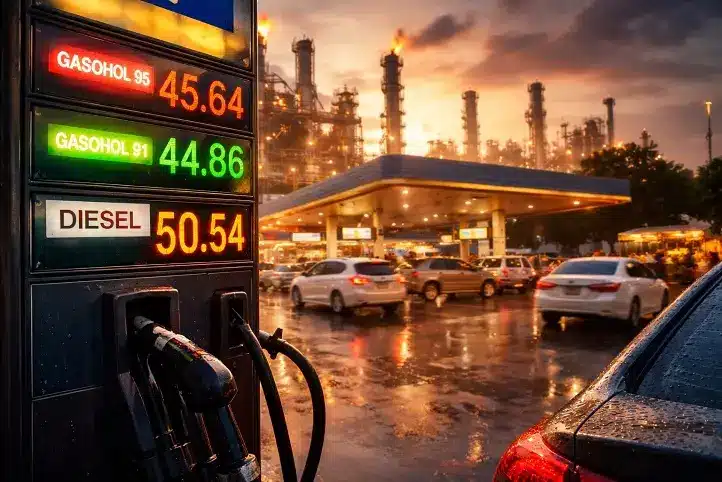
Image Credit: Bangkok Business News
Retail fuel prices began climbing steadily in March, with diesel following shortly after a brief government effort to delay increases. This Bangkok Business News report notes that policy decisions and global pressures have combined to intensify the situation. By April 5, diesel prices hit a historic 50.54 baht per litre after eight successive adjustments, marking the highest level ever recorded in the country.
Global Conflict and Local Impact
The surge in oil prices has been fueled by the prolonged conflict involving the United States, Israel, and Iran, alongside disruptions in critical shipping routes such as the Strait of Hormuz. These developments have introduced a war-risk premium on crude oil, increasing import costs beyond standard pricing mechanisms.
Thailand, which benchmarks its refined oil prices against the Singapore market, has had little choice but to follow global trends. Petrol prices rose earlier in March, while diesel increases were initially delayed under government policy. However, as global prices remained volatile, adjustments became unavoidable, resulting in a cumulative rise of over 20 baht per litre for diesel.
Subsidy Cuts and Mounting Debt
A major factor behind the sharp price increase is the government’s decision to scale back subsidies from the Oil Fuel Fund, which is now burdened with debt exceeding 50 billion baht. By reducing compensation for diesel blends, authorities aim to reflect actual market costs more accurately and ease the fund’s financial strain.
The latest subsidy cuts alone are expected to reduce daily spending by over 200 million baht. However, this shift has transferred more of the burden directly onto consumers, intensifying cost-of-living pressures across the country.
Pressure on Refineries
In response, the government has sought cooperation from Thailand’s six oil refineries to help ease the burden. Officials have explored the possibility of redirecting excess refining profits into the Oil Fuel Fund, echoing a similar approach attempted during the Russia-Ukraine crisis in 2022.
Despite extended discussions, securing meaningful contributions remains a challenge. Previous efforts yielded limited results, raising doubts about whether refineries will significantly support price relief measures this time.
Economic Ripple Effects
The impact of rising diesel prices extends far beyond fuel costs. Economic analysts estimate that every 1-baht increase in diesel prices reduces Thailand’s GDP by approximately 0.02%. Key sectors such as agriculture, manufacturing, and transport are particularly vulnerable, as higher fuel costs drive up production and logistics expenses.
Industry leaders warn that the full impact is yet to be felt, as existing inventory is depleted and businesses begin passing on higher costs to consumers. This could lead to broader inflationary pressures in the months ahead.
Limited Fiscal Options
The government’s ability to intervene is constrained by tight fiscal conditions. While cutting fuel taxes remains an option, officials view it as a last resort due to its impact on state revenue. Instead, reliance on the Oil Fuel Fund continues, despite its growing debt burden.
Plans to guarantee additional borrowing for the fund could further increase public debt and strain Thailand’s fiscal position. With credit rating agencies already expressing concern, prolonged reliance on debt-financed subsidies may pose long-term risks to economic stability.
Final Outlook
Thailand now faces a delicate balancing act between shielding consumers from rising fuel costs and maintaining fiscal discipline. The prolonged Middle East conflict continues to inject uncertainty into global oil markets, leaving policymakers with limited room to maneuver. Without a clear resolution, both fuel prices and economic pressures are likely to remain elevated, testing the resilience of businesses and households alike while shaping the country’s financial outlook in the months ahead.
For the latest on the Thai economy, keep on logging to Bangkok Business News.



