

What To Know
- In the midst of these early warning signs, this Bangkok Business News report highlights growing concern among business operators that the fallout may stretch well beyond tourism, triggering a chain reaction affecting overseas workers, energy prices, exports and foreign investment.
- A disruption in these income streams would directly affect thousands of households and weaken domestic consumption at a time when purchasing power is already fragile.
Bangkok Business News: Escalating tensions across the Middle East are casting a long shadow over Thailand’s economic outlook, with industry leaders warning that tourist arrivals from the region could plunge by as much as 80% if hostilities persist. Mounting flight cancellations and rising oil prices are compounding fears that the crisis could shave between 0.5% and 0.8% off national GDP.

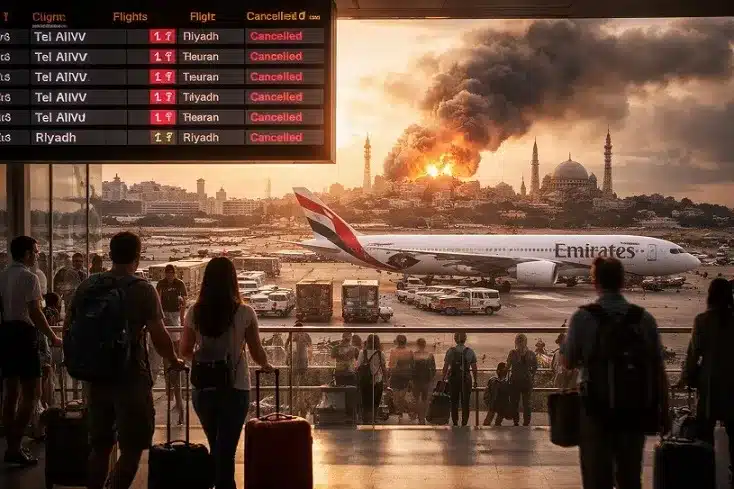
Image Credit: Bangkok Business News
Airlines have already begun cancelling and rerouting flights linked to major Middle Eastern hubs, disrupting travel flows into Thailand. In the midst of these early warning signs, this Bangkok Business News report highlights growing concern among business operators that the fallout may stretch well beyond tourism, triggering a chain reaction affecting overseas workers, energy prices, exports and foreign investment.
Overseas Workers Face Uncertainty
According to Sorathep Rojpotjanaruch, President of the Restaurant Business Club and Honorary Advisor to the Thai Hostel Association, more than 90,000 Thai workers are currently employed across Middle Eastern countries. Any escalation could threaten their safety, income stability and remittances sent back to Thailand. A disruption in these income streams would directly affect thousands of households and weaken domestic consumption at a time when purchasing power is already fragile.
The tourism sector faces an immediate blow. The Middle East is a strategic seasonal market for Thailand, particularly during its high season from June to September. Israeli arrivals could decline by around 30%, while travellers from Iran and other regional markets may drop by as much as 80% if the conflict drags on. Such losses would ripple across hotels, airlines, restaurants and retail businesses that rely heavily on high-spending visitors from the region.
Energy Prices and Cost of Living Pressures
The deeper economic threat lies in energy. Thailand imports roughly 20% of its oil from Iran. Should supply routes be disrupted or global crude prices spike further, transport and logistics costs nationwide would rise swiftly.
Agricultural goods and consumer products depend heavily on oil-based transportation. As fuel costs increase, inflationary pressures would build, gradually lifting prices across the board. Restaurants could face simultaneous increases in ingredient and delivery costs, while electricity expenses may edge higher due to Thailand’s reliance on natural gas and fossil fuels for power generation.
If oil prices remain elevated for three to six months, airline operating costs would surge, likely pushing up airfares to Thailand. Higher ticket prices could discourage travel during peak festivals and year-end holidays, further straining tourism revenues.
Trade and Investment Risks Mount
Should the crisis extend beyond two months, Thailand’s export value to Middle Eastern markets may suffer significantly. Slower trade flows could lead to rising inventories and tighter liquidity for exporters. Currency volatility may further complicate both imports of raw materials and regional trade settlements.
Geopolitical uncertainty also tends to drive investors toward safe-haven assets such as gold, while increasing volatility in digital markets. Foreign investors may delay new commitments while assessing global risks, potentially affecting capital inflows into Thailand.
Although the government has established an economic and security “war room” and confirmed oil reserves of approximately 60–61 days, business leaders stress the urgency of diversifying energy supply sources. Without swift preventive measures, rising energy costs could cascade into broader inflation, weakening household spending and slowing economic momentum.
Thailand’s economic resilience will now depend on how quickly policymakers and businesses adapt to an increasingly uncertain global landscape. Proactive risk management, energy diversification and sustained confidence-building measures will be crucial to limiting long-term damage.
For the latest on the Thai economy, keep on logging to Bangkok Business News.