

What To Know
- Indonesia is confronting one of its most serious financial market crises in decades, as a historic stock market selloff, a weakening rupiah, and mounting concerns over government spending threaten investor confidence in Southeast Asia’s largest economy.
- As this International Business News report examines, the potential downgrade comes at a particularly dangerous moment for President Prabowo Subianto, whose ambitious spending commitments are facing growing scrutiny from international investors already unsettled by currency depreciation and questions surrounding central bank independence.
Indonesia is confronting one of its most serious financial market crises in decades, as a historic stock market selloff, a weakening rupiah, and mounting concerns over government spending threaten investor confidence in Southeast Asia’s largest economy. The turmoil has revived memories of the devastating 1997–1998 Asian Financial Crisis, although Indonesia has not experienced an economic collapse, and its investment-grade sovereign credit rating remains intact.

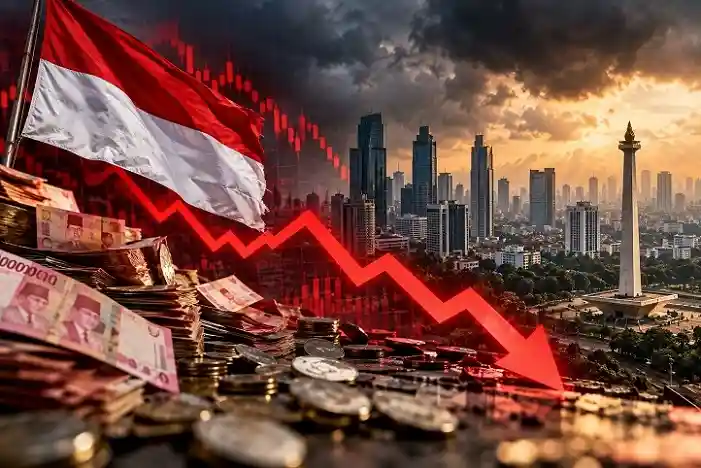
Image Credit: Bangkok Business News
The latest upheaval follows a warning from global index provider MSCI that Indonesia could lose its emerging-market classification because of concerns surrounding market transparency and governance. As this International Business News report examines, the potential downgrade comes at a particularly dangerous moment for President Prabowo Subianto, whose ambitious spending commitments are facing growing scrutiny from international investors already unsettled by currency depreciation and questions surrounding central bank independence.
MSCI Warning Triggers Historic Market Selloff
The immediate catalyst was MSCI’s warning that Indonesia could be reclassified as a standalone market, a category occupied by countries with limited integration into major global equity benchmarks.
Such a decision would represent a significant setback for Indonesia’s international financial standing. Emerging-market classification helps attract investment from institutional funds that track global benchmarks, including pension funds, exchange-traded funds, and international asset managers.
Following the warning, Indonesian equities plunged as much as 11.4% during trading on October 16, marking their steepest decline since the 1998 financial crisis.
The prospect of exclusion has intensified fears that international investors could reduce their exposure to Indonesian securities. A standalone classification could trigger substantial selling by benchmark-tracking funds, although the eventual financial impact would depend on MSCI’s final decision and implementation arrangements.
MSCI’s concerns center on trading transparency, market accessibility, and governance standards. Addressing these deficiencies has become an urgent priority for Indonesian regulators seeking to prevent further capital outflows.
Rupiah Weakness Deepens Economic Pressures
Indonesia’s currency troubles are adding another dimension to the financial turmoil.
The rupiah has weakened toward 18,070 against the US dollar, raising concerns about imported inflation, foreign currency liabilities, and the purchasing power of Indonesian households.
Currency depreciation increases the local cost of imported machinery, industrial materials, and certain energy products. Businesses carrying dollar-denominated debt also face higher repayment expenses, potentially squeezing corporate earnings and discouraging investment.
External developments have compounded these pressures. Middle Eastern geopolitical tensions and energy market volatility have heightened uncertainty over Indonesia’s import costs and external financing requirements.
Bank Indonesia faces the difficult task of stabilizing financial markets without undermining domestic economic activity. Currency intervention can help moderate disorderly movements, but prolonged pressure could increase the cost of defending the rupiah.
The situation remains challenging because excessive monetary tightening could weaken credit demand, business investment, and consumer spending.
Prabowo’s Spending Ambitions Face Scrutiny
Domestic fiscal policy has emerged as another major source of investor anxiety.
President Prabowo’s administration is pursuing expensive social and development initiatives, including its nationwide free nutritious meals program, while confronting questions about government revenue and competing budget priorities.
The meals initiative is intended to improve nutrition, educational outcomes, and long-term productivity. However, its substantial funding requirements have prompted concerns about expenditure efficiency and the government’s ability to maintain fiscal discipline.
Indonesia also continues developing Nusantara, its planned administrative capital in East Kalimantan, although the project’s financing arrangements and implementation extend beyond the current administration.
Critics argue that maintaining costly commitments during financial market instability could restrict resources available for infrastructure, healthcare, and other essential services.
The central question is whether Indonesia can sustain these priorities without allowing fiscal deficits or financing pressures to undermine investor confidence.
Central Bank Independence Faces Growing Questions
Investor unease extends beyond government expenditure to the credibility of Indonesia’s monetary institutions.
Bank Indonesia has insisted that it operates independently, but concerns about political influence have prompted investors to seek stronger assurances that interest rate decisions and currency management will remain guided by economic conditions.
Central bank credibility is particularly important during periods of exchange rate instability. Investors must believe policymakers can respond effectively to inflation, capital movements, and financial market disruptions without excessive political interference.
Changes to foreign exchange earnings requirements for commodity exporters have also attracted scrutiny. Measures designed to retain export proceeds domestically may support foreign currency liquidity, but restrictive implementation could complicate business operations and investment decisions.
For Jakarta, rebuilding confidence will require clear communication, predictable regulations, and credible institutional safeguards.
Critical Months Ahead for Indonesia
Indonesia now faces a decisive test of financial credibility. MSCI’s consultation continues until April 2027, with a final decision expected by June.
Avoiding a deeper crisis will require enforceable market reforms, responsible fiscal management, and renewed investor confidence. Although economic collapse is not inevitable, prolonged capital flight and institutional uncertainty could seriously damage Indonesia’s growth prospects and regional financial standing.
References: