

What To Know
- The global economy is becoming increasingly vulnerable to future crises as vital financial and energy safeguards continue to weaken, according to the International Monetary Fund’s outgoing chief economist, Pierre-Olivier Gourinchas.
- Should tensions involving the United States and Iran escalate again or energy exports become disrupted, countries would face a far more difficult challenge in controlling another surge in oil prices.
International Business News: The global economy is becoming increasingly vulnerable to future crises as vital financial and energy safeguards continue to weaken, according to the International Monetary Fund’s outgoing chief economist, Pierre-Olivier Gourinchas. He cautioned that shrinking strategic oil reserves, persistent geopolitical tensions and rapidly evolving global trade relationships are reducing the world’s ability to withstand another major economic disruption.

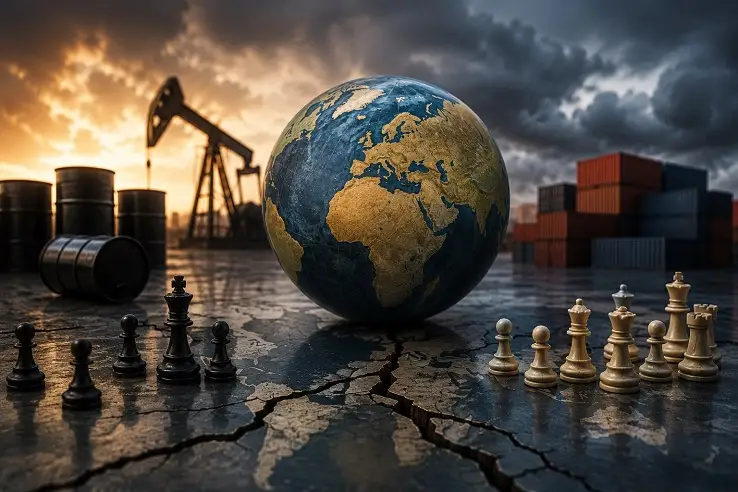
Image Credit: Bangkok Business News
Speaking before ending his tenure at the IMF and returning to the University of California, Berkeley, Gourinchas said emergency petroleum stockpiles that helped stabilise oil markets during recent Middle East tensions have now been significantly reduced. This International Business News report highlights growing concerns that if fresh hostilities erupt and disrupt global energy supplies once again, governments could have far fewer emergency tools available to soften the economic impact. The warning comes at a time when businesses and policymakers are already navigating heightened uncertainty across multiple fronts.
Oil Stockpiles No Longer Offer the Same Protection
According to Gourinchas, strategic petroleum reserve releases played a crucial role in preventing oil prices from soaring following the recent Middle East conflict. Together with refinery adjustments, those emergency measures helped offset supply disruptions that ultimately removed only a small percentage of global oil production from the market, much less than many analysts had initially feared.
However, he warned that these emergency reserves have now been substantially depleted. Should tensions involving the United States and Iran escalate again or energy exports become disrupted, countries would face a far more difficult challenge in controlling another surge in oil prices.
Higher energy costs would inevitably ripple throughout the global economy, increasing transportation expenses, raising production costs for businesses and placing renewed pressure on inflation. Central banks, particularly in countries heavily dependent on imported energy, could once again face difficult decisions between supporting economic growth and controlling rising consumer prices.
IMF Forecast Faces Exceptionally Uncertain Conditions
The IMF is expected to release its updated global economic outlook on July 8, although Gourinchas declined to reveal any details ahead of publication. He noted that forecasting economic performance throughout 2025 and 2026 has become unusually difficult because of the combination of geopolitical instability, tariff disputes and volatile energy markets.
Unlike more predictable periods, economists have struggled to develop a single reliable baseline scenario. Earlier this year, the IMF published several alternative forecasts reflecting different possible outcomes, illustrating how uncertainty itself has become one of the defining characteristics of the global economic landscape.
For investors, governments and businesses alike, the challenge is no longer simply anticipating economic growth but preparing for multiple possible scenarios that could emerge with little warning.
Global Trade Patterns Continue to Shift
Beyond energy concerns, Gourinchas pointed to the continuing transformation of international trade following tariffs introduced by US President Donald Trump. While such measures may provide temporary bargaining power, they have also encouraged nations to strengthen commercial ties elsewhere.
He highlighted recent progress by the European Union in securing long-awaited trade agreements with both Latin America and India, developments that illustrate how countries are increasingly diversifying their trading relationships beyond the United States.
Businesses are also adjusting. Many multinational companies are redesigning supply chains, expanding manufacturing locations and seeking alternative export markets to reduce exposure to future trade disputes and political uncertainty.
Sanctions May Deliver Only Temporary Advantages
Gourinchas also questioned the long-term effectiveness of tariffs and economic sanctions as strategic policy tools. Although they can generate immediate leverage, he argued that targeted countries rarely remain passive for long.
Governments and businesses often respond by developing alternative supply routes, investing in domestic production, forming new trading partnerships or creating financial systems that bypass existing restrictions. Over time, these adjustments can reduce the effectiveness of sanctions while contributing to a more fragmented global trading environment.
Such fragmentation may ultimately create competing economic blocs, separate trading standards and increasingly complex international supply networks, making the global economy less efficient and more difficult to manage.
Asia Faces Both Risks and Opportunities
Asian economies may experience both challenges and potential gains from these evolving global dynamics. Export-oriented nations remain exposed to weaker global demand, higher shipping costs and volatile energy prices should geopolitical tensions intensify.
At the same time, Southeast Asia could emerge as an attractive destination for manufacturers seeking to diversify production away from traditional locations affected by geopolitical risks or trade barriers. Countries capable of offering political stability, modern infrastructure, competitive operating costs and consistent regulatory policies may benefit from increased foreign investment and expanding regional supply chains.
The region’s ability to capitalise on these opportunities will largely depend on maintaining investor confidence while strengthening economic resilience against external shocks.
Building Resilience Becomes the New Priority
Rather than predicting an imminent global economic collapse, Gourinchas emphasised that the international economy is simply becoming more difficult to stabilise. Emergency oil reserves have already been partially exhausted, geopolitical tensions remain elevated, and global trade relationships continue to evolve in response to tariffs and sanctions.
For policymakers, businesses and financial institutions, strengthening resilience may now prove just as important as pursuing economic expansion. Preparing for future disruptions through diversified supply chains, stronger fiscal planning and improved crisis management could determine which economies perform best during the next major global shock. As uncertainty increasingly becomes the norm rather than the exception, governments and businesses alike will need to adapt more quickly to an international landscape defined by political, energy and trade-related risks.
For more reports or projections from the IMF, visit:
https://www.imf.org/en/publications/weo
For the latest International Business News, keep on logging to Bangkok Business News.