

What To Know
- As this Bangkok Business News report explores, his partnership with American restaurateur Greg Lange helped establish the Bangkok Community Help Foundation (BCHF), an organization that has evolved from a pandemic food-relief operation into a multifaceted community development movement addressing hunger, homelessness, education, disaster recovery, and social inequality.
- The foundation operates seven days a week, and Poldervaart’s sustained involvement has helped establish an organizational culture centered on action rather than ceremony.
Bangkok’s glittering skyscrapers, luxury shopping malls, and thriving business districts present an image of economic prosperity and international success. Yet, hidden behind this impressive skyline, thousands of vulnerable residents continue to struggle with poverty, inadequate housing, food insecurity, and limited opportunities. Amid these challenges, Dutch entrepreneur Friso Poldervaart has emerged as a dedicated humanitarian figure, channeling his business experience, personal energy, and extensive professional networks into improving the lives of Bangkok’s disadvantaged communities.

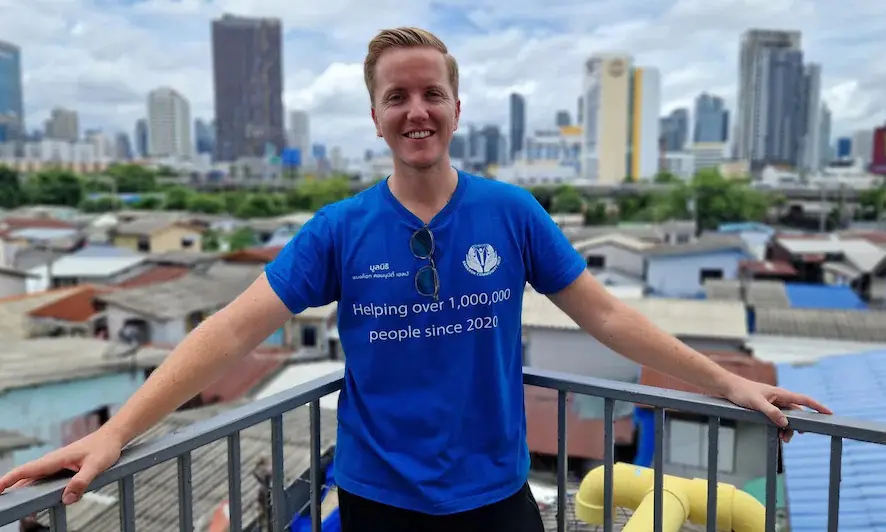
Photo Credit: Kita van Slooten (Image taken from RTL Nieuws)
Best known for introducing innovative entertainment ventures such as Dinner in the Sky Thailand, Poldervaart has increasingly devoted his attention to humanitarian initiatives that deliver tangible improvements to struggling families. As this Bangkok Business News report explores, his partnership with American restaurateur Greg Lange helped establish the Bangkok Community Help Foundation (BCHF), an organization that has evolved from a pandemic food-relief operation into a multifaceted community development movement addressing hunger, homelessness, education, disaster recovery, and social inequality.
From Successful Entrepreneur to Humanitarian Leader
Originally from the Netherlands, Poldervaart established himself in Thailand through entrepreneurship, marketing, media production, and experiential entertainment.
His business interests include Dinner in the Sky Thailand and Digital Distinct, a marketing and media agency. These ventures required organizational expertise, creative thinking, logistical coordination, and the ability to bring together people from different backgrounds.
However, when COVID-19 devastated Bangkok’s economy in 2020, Poldervaart recognized that these same business capabilities could serve a far more urgent purpose.
As tourism collapsed and businesses closed, thousands of informal workers lost their livelihoods almost overnight. In communities such as Khlong Toei, many families suddenly struggled to afford even basic meals.
Together with Lange, Poldervaart responded by mobilizing resources, recruiting volunteers, and organizing emergency food assistance.

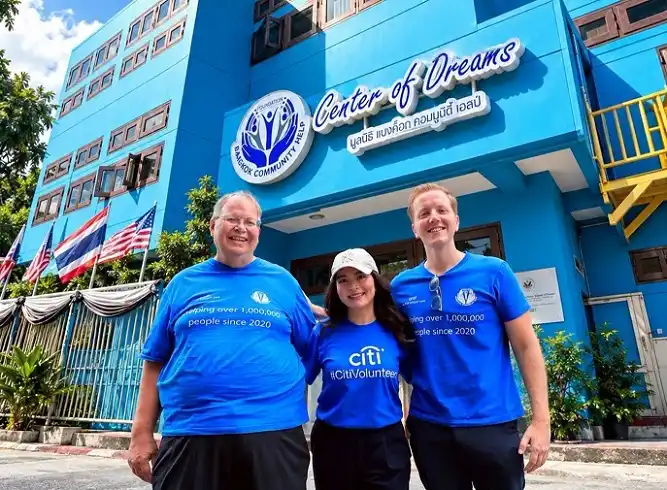
Photo Credit: Bangkok Community Help Foundation
What began as a response to an unprecedented crisis would eventually become a lasting humanitarian commitment.
Bangkok Community Help Foundation: From Emergency Relief to Lasting Change
Established in April 2020, Bangkok Community Help Foundation initially concentrated on delivering freshly prepared meals to residents experiencing severe economic hardship.
Lange contributed his extensive restaurant-management experience, commercial kitchen facilities, food supplies, and distribution expertise.
Poldervaart brought complementary strengths in communications, fundraising, volunteer recruitment, corporate partnerships, and community mobilization.
Together, they developed a practical humanitarian model built around rapid decision-making and direct engagement with people requiring assistance.
The foundation subsequently attracted a volunteer network reportedly involving more than 4,000 participants, including Thai citizens, expatriates, international visitors, and corporate employees.
Today, its activities extend well beyond food distribution, encompassing housing reconstruction, education, environmental improvements, and emergency disaster assistance.
A Different Kind of Humanitarian Leadership
One particularly noteworthy aspect of Poldervaart’s involvement is his emphasis on personal participation rather than simply overseeing charitable activities from a distance.

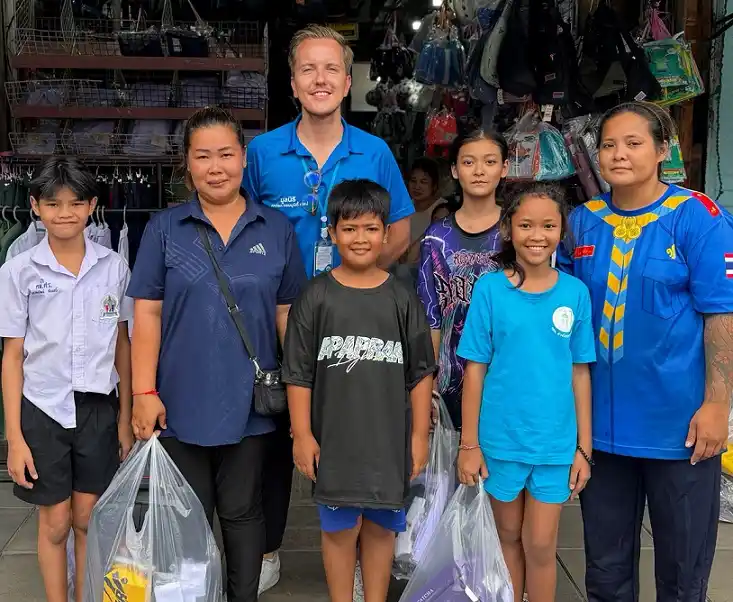
Photo Credit: Bangkok Community Help Foundation
While public perceptions of charitable organizations can sometimes be affected by concerns about administrative spending, executive privileges, and the use of donations, Poldervaart represents a distinctly hands-on approach to humanitarian work.
Rather than cultivating an image centered on luxury, personal status, or extravagant surroundings, his public-facing charitable activities emphasize practical service and direct community engagement.
He is closely associated with the foundation’s frontline operations, whether coordinating food distribution, supporting reconstruction projects, mobilizing volunteers, or assisting communities affected by emergencies.
His commitment reflects a philosophy that effective humanitarian leadership requires more than fundraising campaigns and public appearances. It demands physical presence, consistency, and a willingness to participate in difficult work.
The foundation operates seven days a week, and Poldervaart’s sustained involvement has helped establish an organizational culture centered on action rather than ceremony.
Importantly, this approach should not be viewed as a judgment on other Thai charitable foundations, many of which also undertake valuable humanitarian work. Instead, it highlights the importance of accountability, transparency, and visible leadership in maintaining public confidence.
For businesses considering charitable sponsorship, knowing that organizational leaders remain closely involved in frontline activities can be an important consideration.
Fighting Hunger 365 Days a Year
Food assistance remains one of the foundation’s most important responsibilities.
Its year-round operations provide freshly prepared meals and survival packages to homeless individuals, struggling families, elderly residents, and people experiencing severe financial difficulties.
These packages contain essential household supplies, including rice, cooking oil, canned food, and hygiene products.
For individuals living from one day’s wages to the next, such assistance can provide crucial relief during periods of unemployment, illness, or unexpected financial hardship.
The foundation’s continued food distribution also demonstrates that Bangkok’s underlying poverty challenges did not disappear when pandemic restrictions ended.
Transforming Garbage Dumps into Safe Community Spaces
Beyond emergency assistance, BCHF has undertaken environmental improvement projects in disadvantaged neighborhoods.

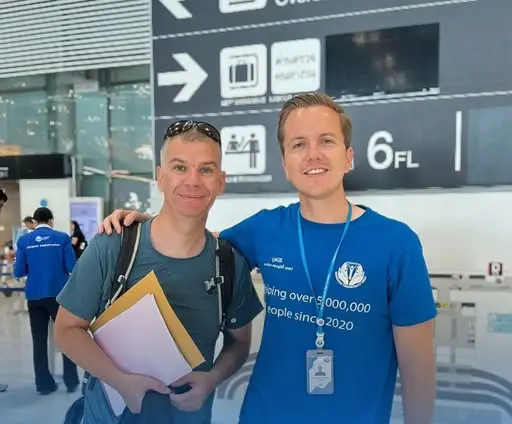
Photo Credit: Bangkok Community Help Foundation
In densely populated settlements, neglected dumping grounds and deteriorating public spaces can expose residents to serious health and safety hazards.
Foundation volunteers have worked to clear accumulated waste and transform neglected areas into cleaner public spaces, including playgrounds and small community parks.
These projects provide children with safer recreational environments while improving neighborhood conditions.
The organization also assists with housing renovation and reconstruction, particularly after fires destroy homes in crowded communities.
Such initiatives recognize that meaningful poverty reduction requires improvements to living environments alongside immediate financial and nutritional assistance.
Center of Dreams: Creating Opportunities for Independence
Another important initiative is the foundation’s Center of Dreams, which provides support and educational opportunities for vulnerable individuals.
The center offers access to temporary accommodation, meals, clothing, hygiene facilities, and practical learning programs.
Children can participate in computer literacy and English-language classes, helping them acquire skills relevant to future educational and employment opportunities.
For adults facing homelessness or severe instability, the foundation has described a structured 90-day rehabilitation program combining temporary shelter with vocational guidance, personal development, and employment preparation.
Developed with support involving the Citi Foundation, the initiative reflects a broader philosophy that humanitarian assistance should create pathways toward independence.
Rather than offering only temporary relief, the objective is to help vulnerable individuals rebuild confidence, develop practical skills, and pursue more stable futures.
Standing With Communities During Disasters
Bangkok Community Help Foundation also participates in emergency responses to flooding, residential fires, and other disasters.

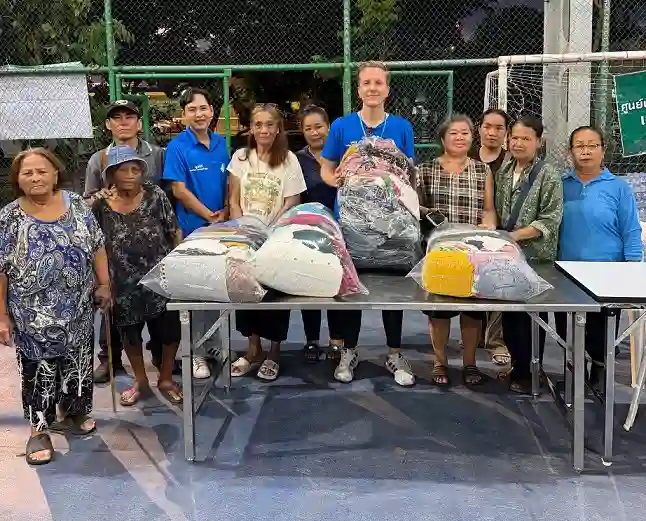
Photo Credit: Bangkok Community Help Foundation
Such emergencies can be particularly devastating for low-income households lacking savings, insurance, or alternative accommodation.
Foundation volunteers help distribute drinking water, food, clothing, and emergency supplies while supporting families recovering from damaged or destroyed homes.
Poldervaart’s organizational experience and emphasis on rapid mobilization have contributed to these efforts.
The foundation’s ability to combine emergency assistance with longer-term rebuilding activities has become an important feature of its community-based approach.
Bangkok’s Businesses Have an Opportunity to Make a Difference
The foundation’s continued development also raises an important question for Bangkok’s corporate community: Could more businesses contribute directly to improving the lives of the city’s most vulnerable residents?
Thailand is home to successful corporations, international hotel chains, property developers, restaurants, supermarkets, manufacturers, and multinational businesses with considerable resources.
Even relatively modest contributions from these organizations could help sustain essential humanitarian activities.
Financial sponsorships could support daily meal preparation, educational programs, housing repairs, and emergency relief.
Equally valuable would be donations of food, drinking water, clothing, hygiene products, school supplies, computers, building materials, and other practical necessities.
Hotels and restaurants could contribute surplus usable food or kitchen resources, while technology companies could support digital education programs.
Construction companies could assist with housing improvements, and businesses could organize employee volunteer initiatives.
Such contributions would represent meaningful corporate social responsibility, connecting commercial success with measurable benefits for surrounding communities.
More Volunteers Are Needed to Keep the Mission Growing
Financial assistance alone cannot sustain a humanitarian movement of this nature.
Volunteers remain essential to the foundation’s ability to prepare meals, distribute supplies, improve community spaces, and respond to emergencies.
Bangkok residents, expatriates, university students, retirees, and corporate employees all have opportunities to contribute their time and professional abilities.
Volunteering does not necessarily require specialized qualifications. Preparing food, packing supplies, cleaning community areas, and assisting with basic administrative work can all make a difference.
Individuals with expertise in education, technology, construction, healthcare, logistics, or communications may also be able to provide valuable professional support.
Businesses could encourage employees to participate through organized volunteering days, helping develop stronger connections between the corporate sector and the communities around them.
A Worthy Cause That Deserves Greater Support
Friso Poldervaart’s journey demonstrates how entrepreneurial experience can become a powerful resource for humanitarian progress. Alongside Greg Lange and the foundation’s volunteers, he has helped develop an organization that addresses immediate hardship while creating opportunities for longer-term improvement.
However, the responsibility for supporting Bangkok’s disadvantaged communities should not rest on a relatively small group of dedicated individuals.
More businesses should consider sponsoring Bangkok Community Help Foundation through financial contributions, products, equipment, and professional services. More individuals should also consider volunteering their time and skills.
With stronger corporate participation and broader public involvement, the foundation could expand its assistance to additional vulnerable households.
Poldervaart and his colleagues have demonstrated what determined individuals can accomplish. Greater support from Bangkok’s business community and residents could help ensure that their humanitarian efforts continue reaching those who need them most.
For those wanting to help the Bangkok Community Help Foundation in which ever they can, visit: