

What To Know
- Occupancy rates in Grade A and A+ buildings — which stood around 81 % in 2024 — are forecast to slide.
- For the latest on the office and commercial property market in Thailand, keep on logging to Bangkok Business News.
Bangkok Business News: Oversupply Threat Casts Shadow Over Bangkok Commercial Property
Bangkok’s commercial real estate sector faces a looming reckoning as new office space continues flooding the market just as demand stagnates. The latest outlook warns of intensifying competition through 2025–26, as supply growth in the office segment far outpaces recovery in tenant demand. In fact, this Bangkok Business News report signals that the imbalance may erode rental values and compel developers to rethink strategy.

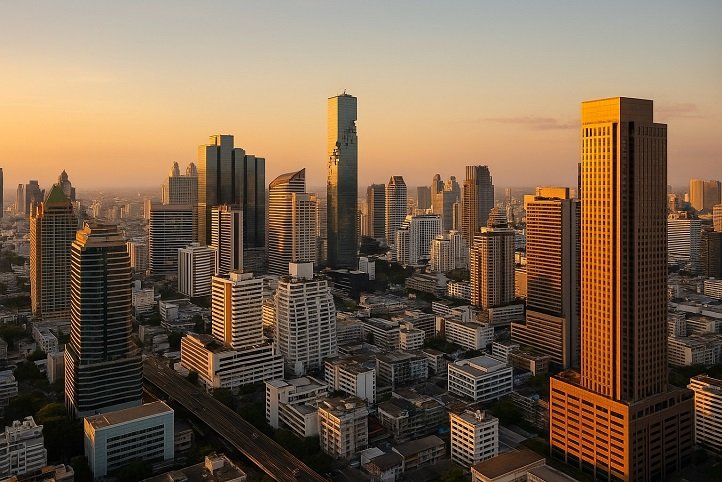
Bangkok skyline signals mounting pressure on the commercial property sector
Image Credit: AI-Generated
According to analysts, the pipeline of new office inventory is projected to grow by 2.5 % to 4.5 % annually over the next two years, while demand is expected to inch up by only about 1 % or less in the same period. As a result, occupancy rates in Grade A and A+ buildings — which stood around 81 % in 2024 — are forecast to slide. Many landlords may be forced to slash rents or offer concessions just to retain tenants.
Retail properties are not immune, though the pressure is less acute. New retail inventory is expected to expand by 3 % to 4 % yearly, but weak domestic consumption and sluggish tourist recovery mean retailers could struggle to fill vacancy rates. Rental growth in the retail sector is expected to hover modestly at around 1 % to 2 %.
Developers Forced to Compete on Quality Efficiency and ESG
In response to this challenging environment, the playing field will favor large, capital-strong developers with brand recognition and reserves. Mid-sized or smaller players may find themselves forced into catch-up mode, reducing risk exposure and pivoting to niche differentiation.
Key strategies include elevating building quality and amenities with value-added services and mixed-use features, optimizing operational costs through tighter budgets and streamlined systems, and pushing sustainability credentials such as green certifications and energy-efficient designs. Some developers are also expected to slow down or delay new projects in less promising zones until demand shows clearer signs of recovery.
Implications for Tenants Investors and Landlords
For tenants, this environment could herald better negotiating power, cheaper lease terms, and more flexible contracts. For investors and landlords, pressure is rising to reposition assets, refurbish buildings, and reimagine tenant mixes to maintain relevance. Passive ownership without reinvestment may no longer be a viable option.
Ambitious developers may still find opportunities in under-served districts or through redevelopment of older stock. However, prudent market timing, rigorous feasibility studies, and strong value propositions will be essential.
Bangkok’s office market is heading into a period of turbulence driven by oversupply and weak demand growth. Only those agile enough to innovate, reduce costs, and build sustainable attractiveness will thrive. The commercial real estate landscape is shifting fast, and winners will be those who adapt with vision and speed.
For the latest on the office and commercial property market in Thailand, keep on logging to Bangkok Business News