

What To Know
- China has intensified its trade and diplomatic pressure on Japan after expanding its export control blacklist to include another 20 Japanese companies and organizations, marking the latest escalation in a dispute that has steadily worsened over security concerns and Taiwan.
- Among the latest entities placed on China’s export control list are the National Institute for Defense Studies, research centers supporting Japan’s ground, naval and air defense systems, as well as Mitsubishi Electric Defense and Space Technologies Corporation and several defense-related subsidiaries of Mitsubishi Heavy Industries.
International Business News: China has intensified its trade and diplomatic pressure on Japan after expanding its export control blacklist to include another 20 Japanese companies and organizations, marking the latest escalation in a dispute that has steadily worsened over security concerns and Taiwan. The latest restrictions target several of Japan’s defense-related research institutes and manufacturers, with Beijing insisting the measures are necessary to safeguard its national security and prevent technologies with military applications from strengthening Japan’s defense capabilities. The decision also reinforces China’s growing willingness to use its dominance in critical supply chains as leverage amid rising geopolitical tensions in the Asia-Pacific region.

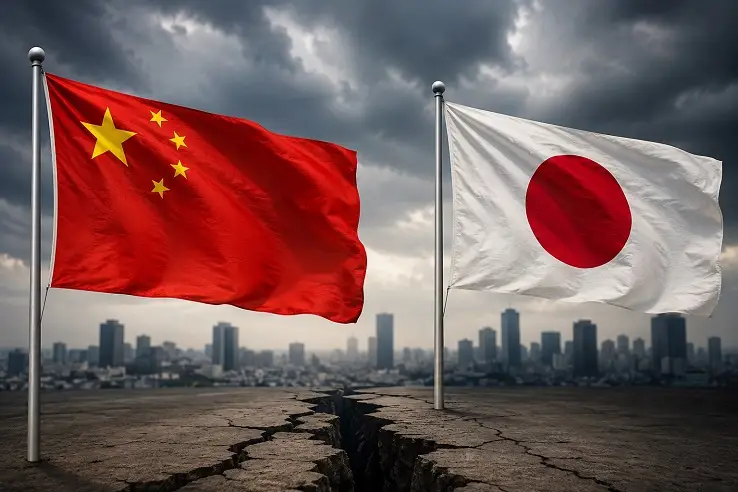
Image Credit: Bangkok Business News
The announcement by China’s Ministry of Commerce comes just months after Beijing imposed similar restrictions on dozens of Japanese entities in February. This International Business News report notes that the latest action not only broadens China’s export controls but also signals that relations between Asia’s two largest economies continue to deteriorate despite their deep commercial ties. Chinese authorities stressed that the restrictions would take immediate effect and would apply to both domestic exporters and overseas organizations handling Chinese-origin dual-use products.
Defense Organizations Added to Blacklist
Among the latest entities placed on China’s export control list are the National Institute for Defense Studies, research centers supporting Japan’s ground, naval and air defense systems, as well as Mitsubishi Electric Defense and Space Technologies Corporation and several defense-related subsidiaries of Mitsubishi Heavy Industries.
Under the new rules, Chinese exporters are prohibited from supplying dual-use products to the listed organizations. Overseas companies and individuals are also barred from transferring Chinese-origin dual-use goods to the affected entities, while any ongoing export arrangements must be halted immediately.
In a separate move, Beijing also placed another 20 Japanese organizations on a watch list requiring enhanced licensing reviews before any exports can proceed. The additional companies include Mitsui E&S Co., drone manufacturer Terra Drone Corporation, several nuclear fuel processors and multiple units of OKI Electric Industry.
Chinese officials said exports involving military users, military purposes or activities that could enhance Japan’s defense capabilities would not receive approval under the tightened review process.
Campaign of Increasing Economic Pressure
Monday’s announcement represents another step in a broader campaign launched earlier this year. In January, China introduced restrictions on exports of rare earth elements, permanent magnets and other critical minerals destined for Japan. These materials are essential for producing advanced defense equipment, semiconductors, electric vehicles, missile guidance systems, lasers and numerous other high-technology products.
The February measures further expanded the pressure by placing 20 Japanese defense-linked companies on China’s export control list while another 20 firms were added to its enhanced surveillance register. The latest additions significantly broaden the scope of those restrictions and demonstrate Beijing’s determination to maintain pressure on Tokyo.
Chinese officials maintain that the export controls are intended solely to protect national security and comply with international non-proliferation obligations. However, analysts view the repeated expansion of the blacklist as part of a wider strategy to increase economic leverage over countries whose security policies conflict with Beijing’s interests.
Taiwan Dispute Fuels Diplomatic Rift
Relations between Beijing and Tokyo have become increasingly strained since Japanese Prime Minister Sanae Takaichi stated last November that Japan could potentially respond militarily if China were to attack Taiwan. Beijing reacted strongly to those remarks, accusing Tokyo of interfering in China’s internal affairs and adopting what it described as a more aggressive security posture.
A spokesperson for China’s Commerce Ministry said Japan had shown no signs of reversing course since the earlier export restrictions. Instead, Beijing accused Tokyo of accelerating what it called a “new form of militarism” through expanded defense cooperation and the deployment of offensive military capabilities.
Despite the tougher measures, Chinese officials insisted that ordinary commercial trade between the two countries would continue and that law-abiding Japanese businesses have no reason to be concerned.
Supply Chains Face Growing Risks
The dispute highlights China’s considerable influence over global supply chains for rare earth minerals and other strategic materials. As the world’s largest producer and processor of rare earths, China remains a critical supplier for industries ranging from consumer electronics and renewable energy to aerospace and advanced defense manufacturing.
Although Japan has invested heavily in diversifying its supply chains since an earlier rare earth dispute in 2010, many manufacturers remain dependent on Chinese processing facilities and regional supply networks. Economists have warned that an extended disruption to Chinese rare earth exports and related components could significantly affect Japanese industrial production and economic growth.
The latest expansion of China’s export blacklist illustrates how trade policy has become an increasingly important geopolitical tool in East Asia. While both governments continue to emphasize the importance of stable economic relations, their growing security disagreements are spilling further into commerce and technology. Unless diplomatic dialogue resumes and tensions ease, businesses operating across the region are likely to face continued uncertainty over supply chains, investment decisions and access to critical materials that underpin modern manufacturing.
For the latest International Business News, keep on logging to Bangkok Business News.