


What To Know
- Cambodian jasmine rice is mounting an increasingly serious challenge to Thailand’s prized Hom Mali rice, with a dramatic price gap of up to US$400 a ton threatening Thai market share in the United States and other major destinations.
- Chookiat Ophaswongse, honorary president of the Thai Rice Exporters Association, said Thai Hom Mali exports had fallen around 20% over the past seven to eight months as buyers increasingly confronted a striking price difference.
Cambodian jasmine rice is mounting an increasingly serious challenge to Thailand’s prized Hom Mali rice, with a dramatic price gap of up to US$400 a ton threatening Thai market share in the United States and other major destinations.
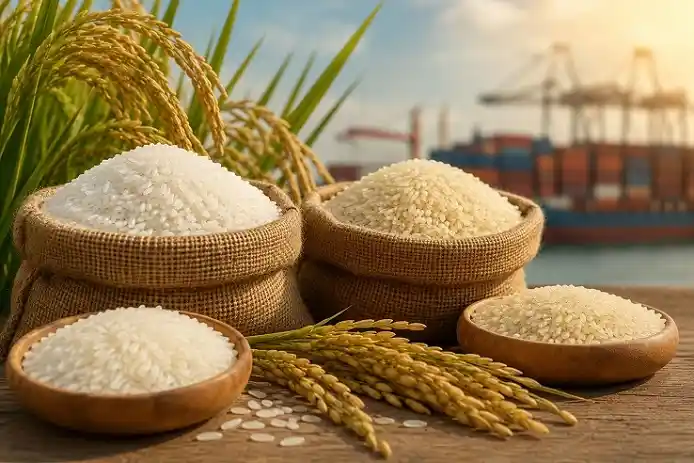
Image Credit: Bangkok Business News
Thailand exported 3.28 million tons of rice during January-June 2026, down 19% from 4.04 million tons a year earlier. Export earnings dropped 20.51% to US$1.911 billion, or approximately 60.39 billion baht. Midway through a year marked by intensifying competition, this Bangkok Business News report finds that price pressure is becoming particularly acute for premium jasmine rice.
US Market Comes Under Pressure
The United States remained Thailand’s biggest rice market by value, generating 12.489 billion baht despite a 13% decline. South Africa followed at 6.247 billion baht, down 10%, while exports to China plunged 48% to 2.945 billion baht.
Malaysia and the Philippines provided brighter spots. Export value to Malaysia soared 201% to 3.908 billion baht, while shipments to the Philippines increased 85% to 3.780 billion baht.
Chookiat Ophaswongse, honorary president of the Thai Rice Exporters Association, said Thai Hom Mali exports had fallen around 20% over the past seven to eight months as buyers increasingly confronted a striking price difference.
Thai Hom Mali is being offered at approximately US$1,200-1,250 a ton, compared with roughly US$800 for Cambodian jasmine rice. Previously, Cambodian rice was only around US$50 cheaper.
Border Closures Reshape Competition
Chookiat linked the widening gap partly to Thailand-Cambodia border closures. Around 500,000 tons of Cambodian paddy previously entered Thailand annually for milling and re-export. With those flows disrupted, Cambodian exporters have accelerated direct overseas sales.
The consequences are being felt in the US, China and parts of Europe. Chookiat also said Cambodian rice was sometimes repackaged in certain markets and sold as Thai jasmine rice.
Thai White Rice Also Faces Price War
Competition extends beyond premium jasmine varieties. Thai 5% broken white rice costs around US$440-450 a ton, against approximately US$420 for Vietnamese rice, US$395 for Pakistani rice and US$350 for Indian rice.
Thailand nevertheless retains an advantage among buyers that prioritize consistent quality and reliable delivery.
Philippines, Malaysia Offer Lifeline
Shipments to Iraq have almost stopped amid the Middle East war, but rising Philippine and Malaysian demand is cushioning the decline. The Philippines imported nearly 400,000 tons of Thai rice during the first half and could buy 600,000-700,000 tons this year.
Malaysia has meanwhile expanded reserves from three months to nine months of consumption, helping drive stronger Thai shipments.
Thailand therefore faces a difficult second half: cheaper Cambodian and regional supplies are challenging its competitiveness, but strong demand, established quality and dependable delivery could still keep the country close to its seven-million-ton export target and preserve its position among the world’s leading rice exporters.



