


What To Know
- Bangkok’s office property landscape is shifting once again as nearly 300,000 square meters of new space is set to hit the market in the second half of 2025.
- While the city has long positioned itself as a hub for regional business, this influx comes at a time when the overall economy is slowing, making it harder for landlords to maintain strong demand.
Bangkok Business News: New supply enters an already crowded market
Bangkok’s office property landscape is shifting once again as nearly 300,000 square meters of new space is set to hit the market in the second half of 2025.
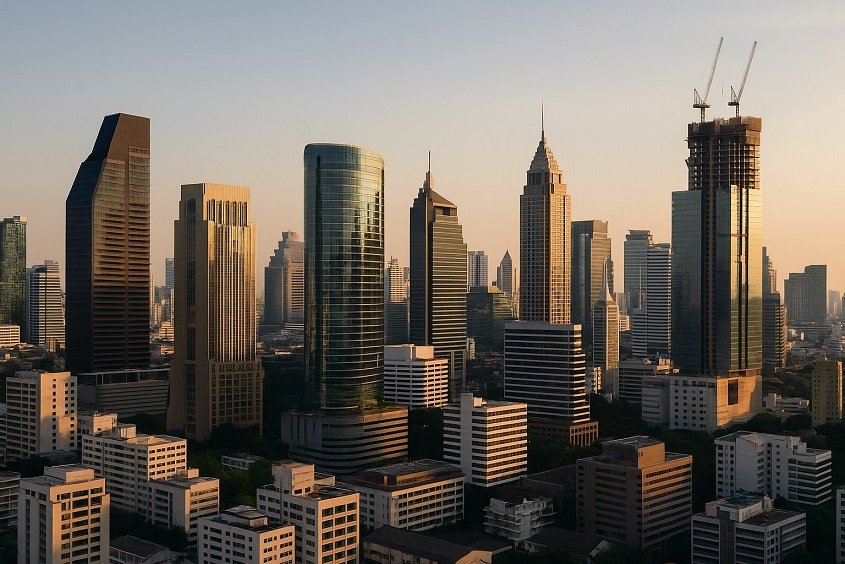
Bangkok is facing an oversupply of office space as the take up rate is declining due to the current slump
Image Credit: AI-Generated
While the city has long positioned itself as a hub for regional business, this influx comes at a time when the overall economy is slowing, making it harder for landlords to maintain strong demand. According to this Bangkok Business News report, the combination of rising supply and weaker sentiment has forced owners to adopt creative strategies to attract tenants, from flexible lease terms to competitive pricing.
Leasing activity and sustainable office demand
Despite mounting concerns, the second quarter of 2025 still showed resilience. Leasing activity was slightly strong, with almost 200,000 square meters of deals completed. Much of this demand came from companies seeking premium or environmentally certified buildings, underscoring a long-term shift toward “green” workplaces. Four new high-profile towers, including APAC Tower and KingBridge Tower, expanded the city’s total stock to over 6.57 million square meters. Although not all new space entered the market immediately—some was reserved for internal use—net absorption still stood at a solid 66,000 square meters.
Occupancy gaps between building grades
Bangkok’s office occupancy rate dropped slightly to 75.8% in Q2, highlighting the fierce competition among landlords. Grade A offices saw occupancy dip to 74.3%, while Grade B fell more sharply to 73%. Interestingly, Grade C offices bucked the trend, climbing to 81.2% as tenants looked for cost-effective alternatives. This suggests a growing divide between companies still willing to pay for premium space and those seeking to cut expenses during uncertain times.
Rental trends across the city
Average rents nudged higher overall, reaching THB 832 per square meter per month. However, a closer breakdown tells a different story. Grade A rents slipped by 1.2% to THB 1,230, while Grade B fell 0.7% to THB 860. Grade C remained flat at THB 540. The general increase came largely from new projects whose rents, though lower than existing stock of similar grade, were still above the market average. Meanwhile, older properties are cutting rates to stay in the game, narrowing the pricing gap between categories. The central business district (CBD) softened further, with rents down 1.4% and occupancy at 74%. By contrast, non-CBD zones like Phahon Yothin and Ratchada showed modest rent growth, even if occupancy fluctuated.
The outlook for the rest of 2025
Looking ahead, the picture is mixed. Around 300,000 square meters of additional supply will enter the market before year-end, intensifying competition further.
Many companies are holding steady rather than expanding, citing weaker consumer confidence and global trade challenges. Landlords are increasingly focusing on flexibility—whether through shorter leases, tenant fit-out support, or extra services—as the ultimate survival tool. The message from this quarter is clear: Bangkok’s office market is entering an era of adaptation where resilience depends on adjusting to the evolving needs of tenants. The long-term success of building owners will hinge on their ability to offer value beyond rent.
The study of Bangkok’s office market paints a telling picture of resilience against a backdrop of economic slowdown. Although new supply will weigh heavily on occupancy and rents, the willingness of landlords to adapt may determine the balance of survival and growth. For tenants, this wave of competition provides an opportunity to secure favorable terms, while landlords must continue to innovate. The next few months will reveal whether flexibility can truly shield the market from prolonged weakness, or whether pressure will deepen.
For the latest on the office space market in Bangkok, keep on logging to Bangkok Business News.